

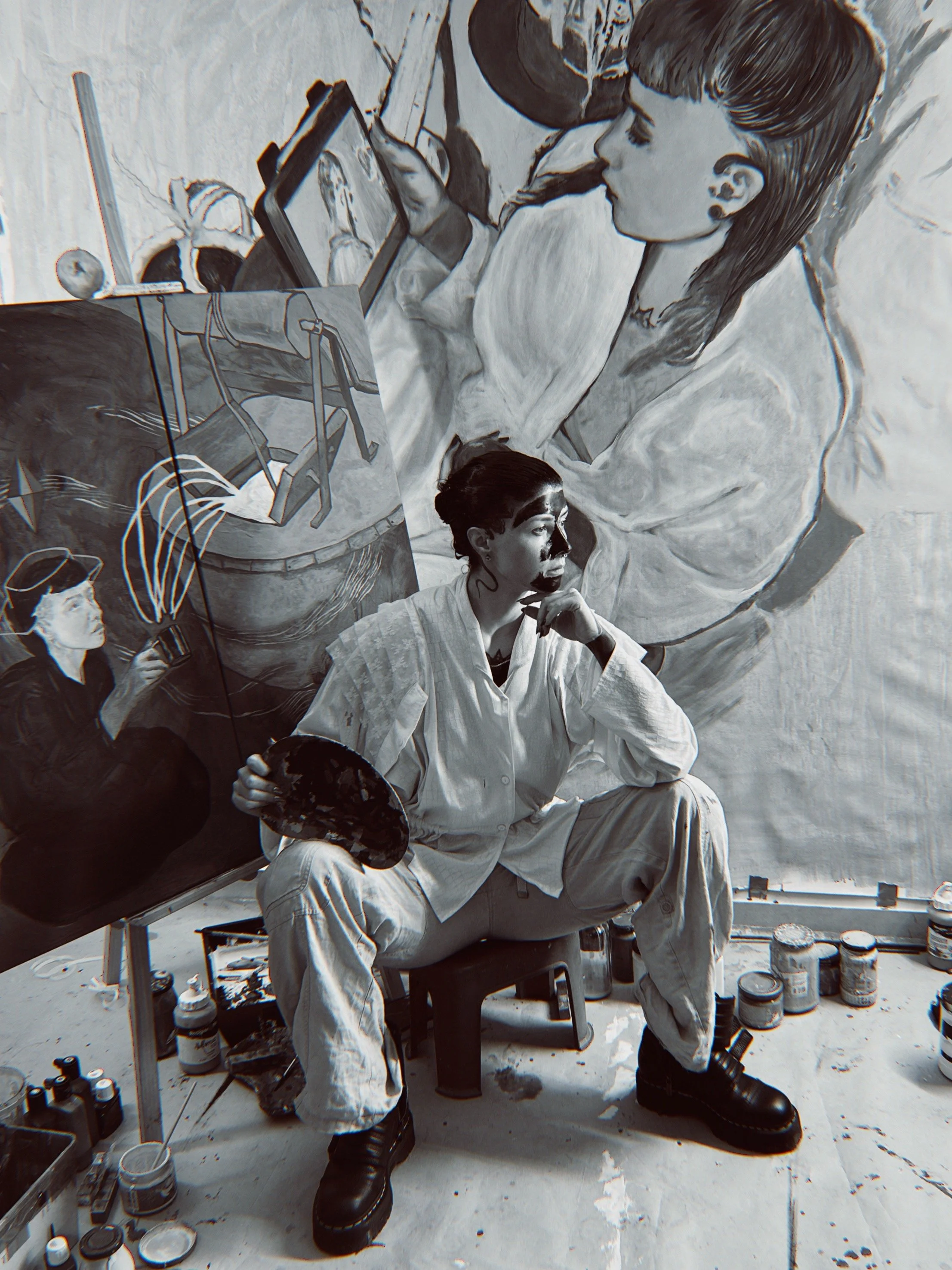
Aglaja Ray (Eglė Tamulytė, g. 1988) – tarpdisciplininė menininkė, savo kūryboje tyrinėjanti vietos, kraštovaizdžio, atminties ir kasdienės patirties santykį. Dirbdama tapybos, instaliacijos, asambliažo, viešojo meno, poezijos ir meninio tyrimo srityse, ji analizuoja, kaip aplinka formuoja žmogaus suvokimą, priklausymo jausmą ir kolektyvinę atmintį. Menininkės pasirinktas vardas Aglaja kilęs iš graikų kalbos ir reiškia švytėjimą arba spindesį. Šviesa jos kūryboje tampa ne tik vizualiu reiškiniu, bet ir dėmesio, buvimo bei vidinės transformacijos metafora. | Aglaja Ray (Eglė Tamulytė, b. 1988, Lithuania) is an interdisciplinary artist whose practice explores the relationship between landscape, memory and lived experience. Working across painting, installation, assemblage, public art, poetry and artistic research, she investigates how places shape individual and collective ways of seeing, remembering and belonging. The name Aglaja derives from the Greek Aglaia, meaning radiance or splendour—a recurring metaphor throughout her practice, where light functions both as a physical phenomenon and as a symbol of attention, presence and transformation.
KŪRYBINĖ PRAKTIKA | CREATIVE PRACTICE
Aglaja Ray kūrybą suvokia kaip ilgalaikį meninį tyrimą, o ne pavienių kūrinių kūrimą. Kiekvienas projektas prasideda įsitraukimu į konkrečią vietą – gyvenimu bendruomenėje, kasdienių praktikų stebėjimu, vaikščiojimu kraštovaizdyje, pokalbiais ir vietos istorijų rinkimu. Šios patirtys palaipsniui virsta tapybos darbais, instaliacijomis, objektais ir viešojo meno intervencijomis. Jos kūryba jungia fenomenologinį stebėjimą ir socialiai angažuotą praktiką, tyrinėdama, kaip aplinka formuoja žmogaus tapatybę, emocinę patirtį ir santykį su vieta. Menininkę domina ne vietos reprezentacija, bet joje slypintys ryšiai tarp kraštovaizdžio, istorijos ir kasdienio gyvenimo. | Aglaja Ray approaches artistic practice as a long-term process of research rather than the production of individual artworks. Her projects often begin by immersing herself in a specific place—living within communities, observing everyday rituals, walking landscapes and collecting conversations, memories and visual fragments that gradually become paintings, installations and spatial interventions. Her work combines phenomenological observation with social engagement, exploring how environments influence perception, identity and emotional experience. Rather than documenting places, she seeks to reveal the often invisible relationships between landscape, history and everyday life.
MENINIS METODAS | ARTISTIC APPROACH
Ankstesniuose meniniuose tyrimuose Aglaja Ray nagrinėjo technologijų, teologijos ir posthumanizmo temas, bendradarbiaudama su mokslininkais, filosofais ir teologais. Pastaraisiais metais jos kūryba kryptingai pasisuko į vietos specifikos, bendruomenės ir kasdienės patirties tyrimus. Nepaisant besikeičiančių temų, jos metodas išlieka nuoseklus – meninis tyrimas tampa būdu pažinti pasaulį, o tapyba yra viena iš platesnės tarpdisciplininės praktikos dalių. | Previous research projects investigated technology, theology and posthumanism through interdisciplinary collaborations with scientists, philosophers and theologians. While these works examined humanity's relationship with technological futures, her recent practice has shifted towards direct engagement with lived environments, community and landscape. Across different bodies of work, a consistent methodology remains: artistic research as a form of knowledge production, where painting becomes one element within broader spatial, social and conceptual investigations.
BIOGRAFIJA | BIOGRAPHY
Eglė Tamulytė yra Vilniaus dailės akademijos grafikos magistrė, profesionali meno kūrėja, nuo 2016 m. turinti Lietuvos Respublikos meno kūrėjos statusą. Nuo 2026 m. ji yra Lietuvos dailininkų sąjungos narė. Jos meninę praktiką ne kartą rėmė Lietuvos kultūros taryba, skirdama individualias stipendijas tarpdisciplininiams meniniams tyrimams. 2016 m. menininkei buvo skirta prestižinė Ary Stillman vardinė stipendija. Per daugiau nei penkiolika metų kūrybinės veiklos Eglė Tamulytė (kaip Shaltmira, vėliau Aglaja Ray) surengė personalines ir dalyvavo grupinėse parodose, viešojo meno projektuose, meno mugėse bei rezidencijose Lietuvoje ir užsienyje, tarp jų – Prancūzijoje, Vokietijoje, JAV, Švedijoje ir kitose šalyse. Šiuo metu gyvena ir kuria Lietuvoje. | Eglė Tamulytė holds a Master's degree in Graphic Arts from the Vilnius Academy of Arts and has held the official status of Professional Artist in Lithuania since 2016. Since 2026, she has been a member of the Lithuanian Artists' Association. Her artistic practice has been supported by multiple individual grants from the Lithuanian Council for Culture for interdisciplinary artistic research. In 2016, she was awarded the prestigious Ary Stillman Scholarship. Over more than fifteen years of artistic practice, Eglė Tamulytė, formerly working under the artist name Shaltmira before adopting the name Aglaja Ray, has presented solo and group exhibitions, public art projects, art fairs and artist residencies in Lithuania and internationally, including France, Germany, the United States, Sweden and other countries. She currently lives and works in Lithuania.