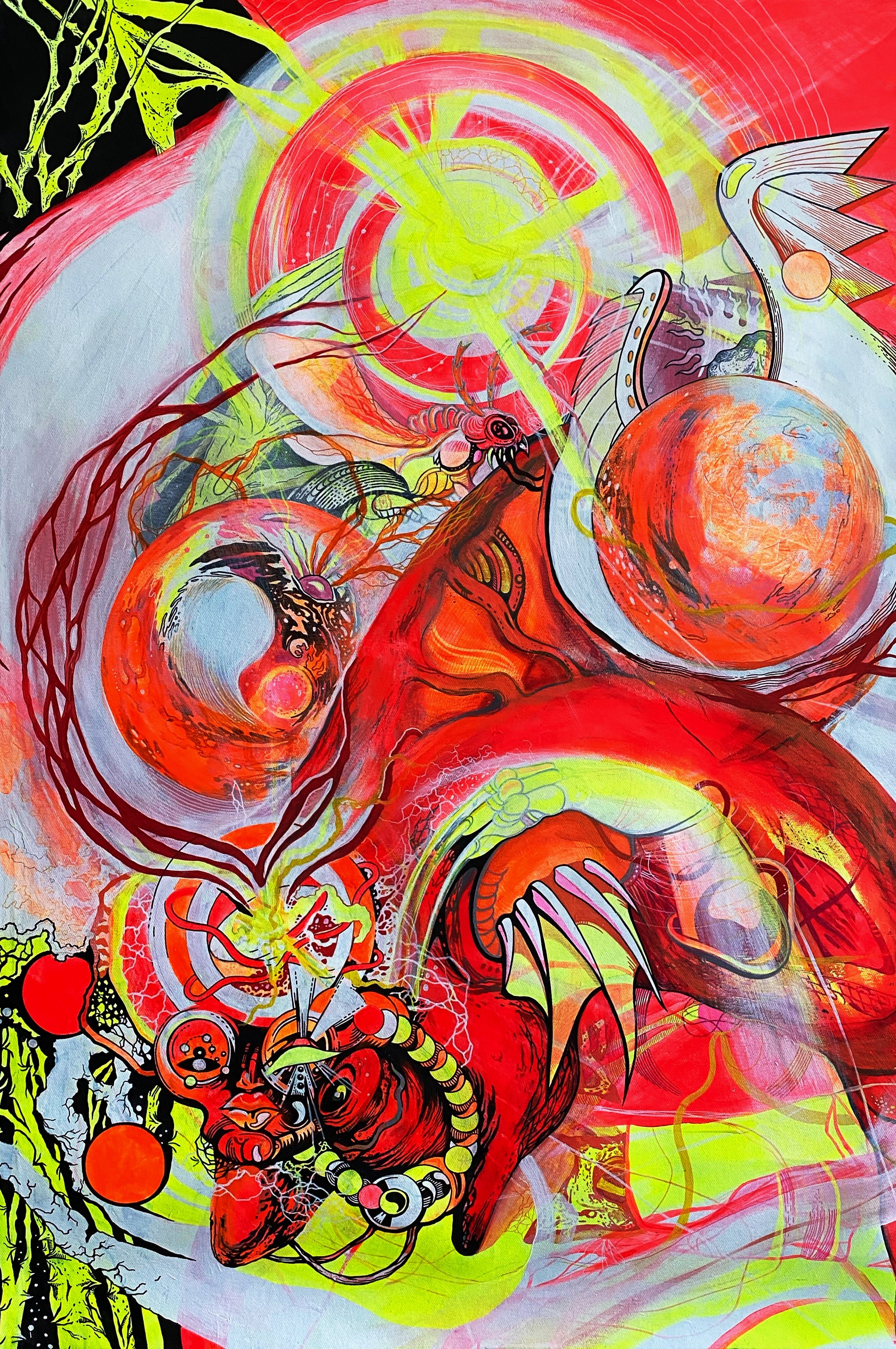
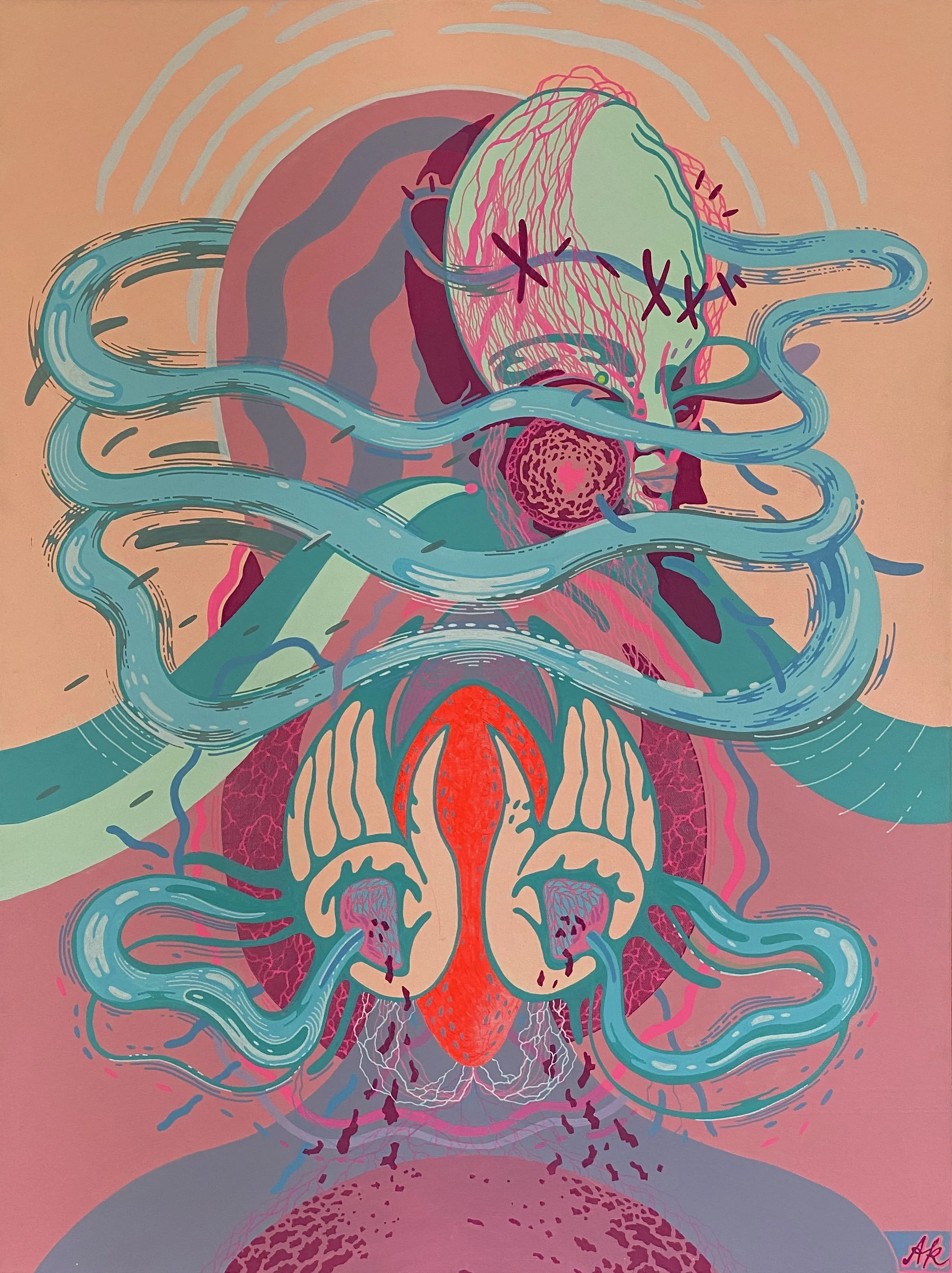
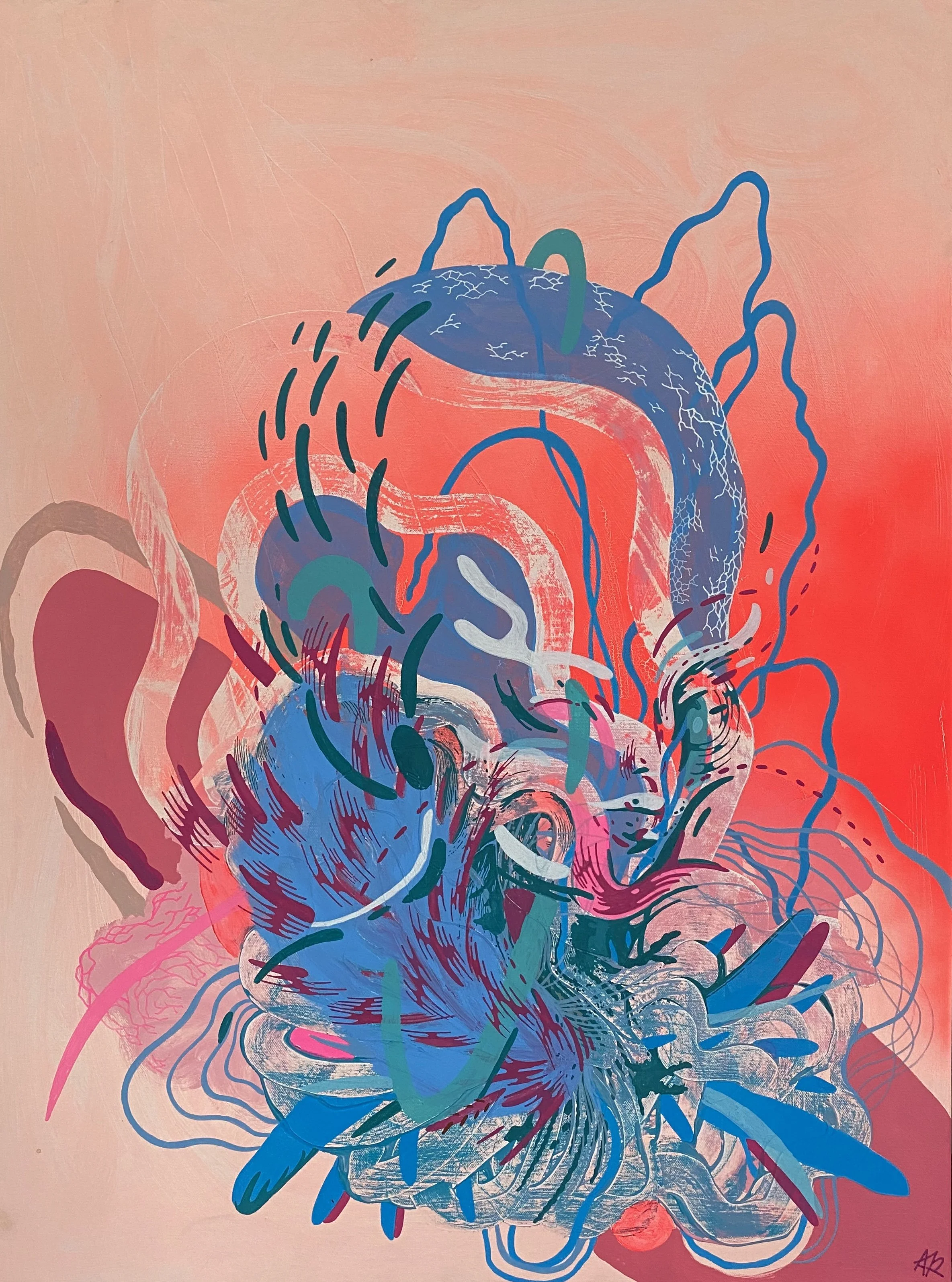
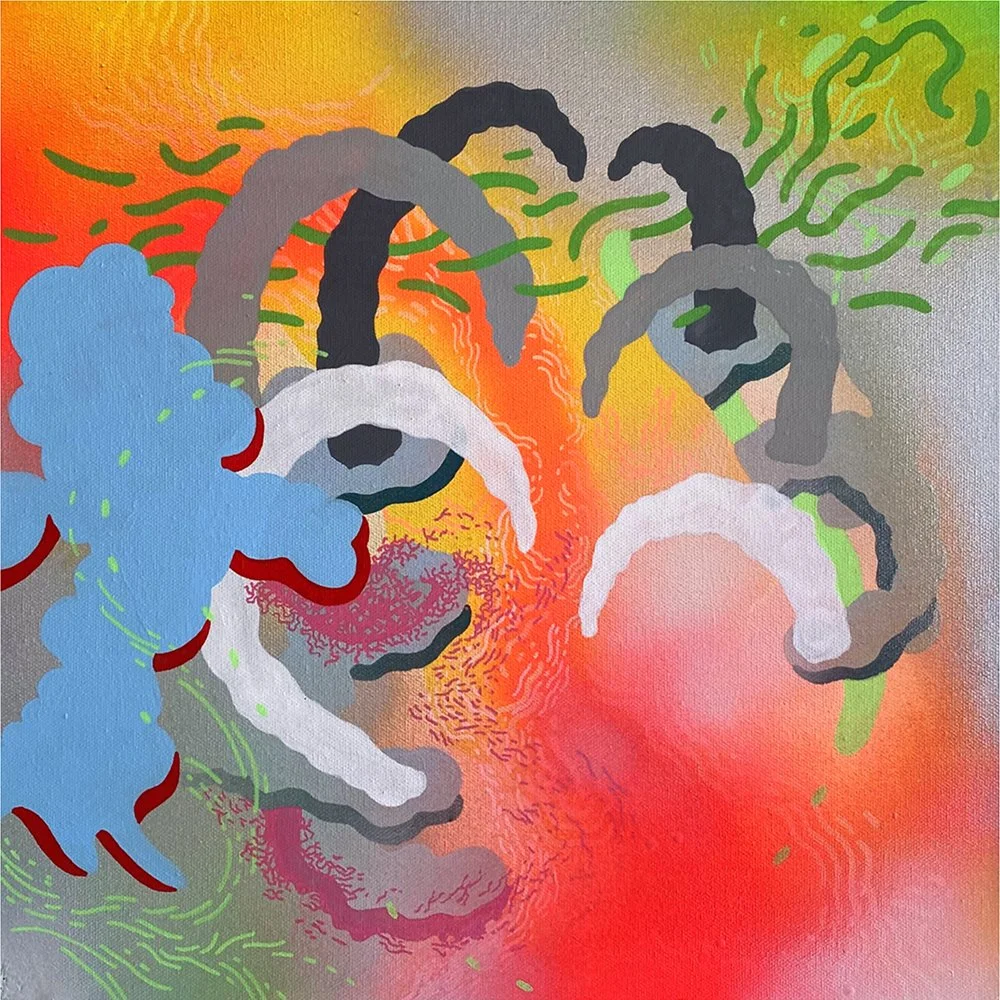
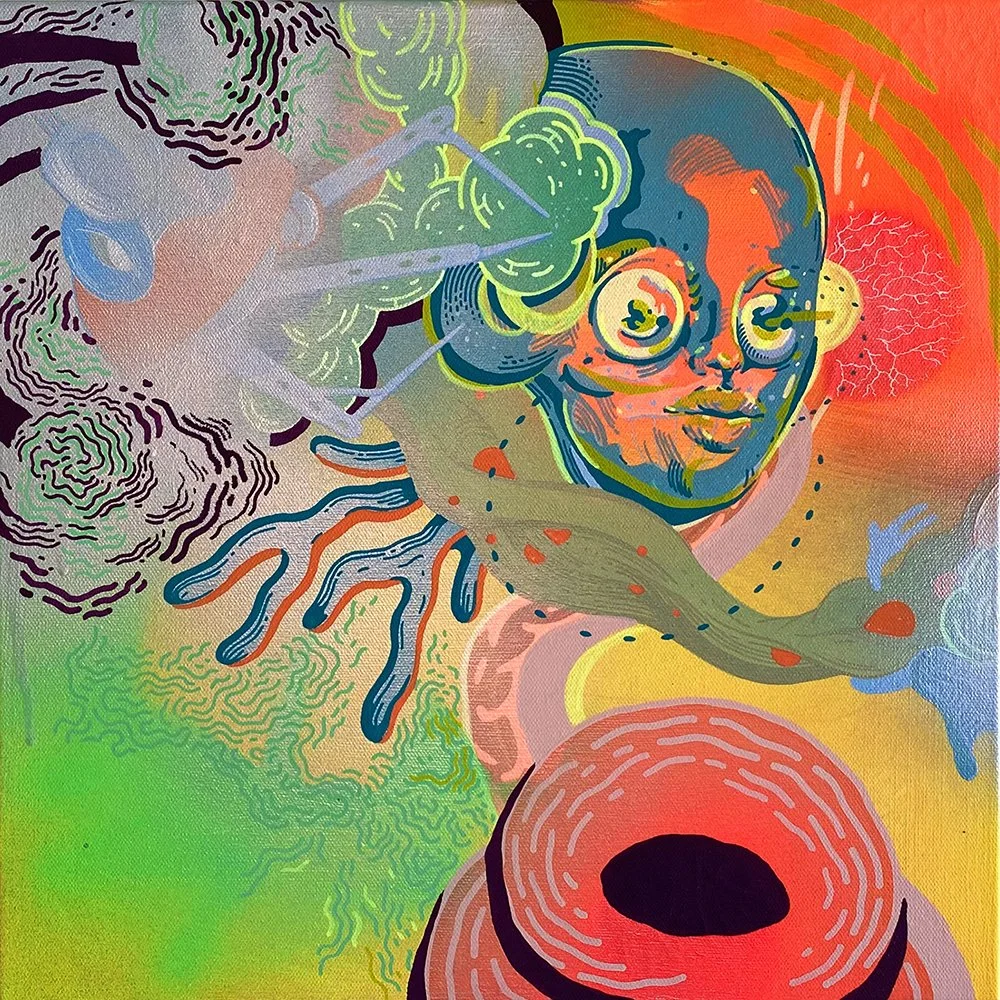
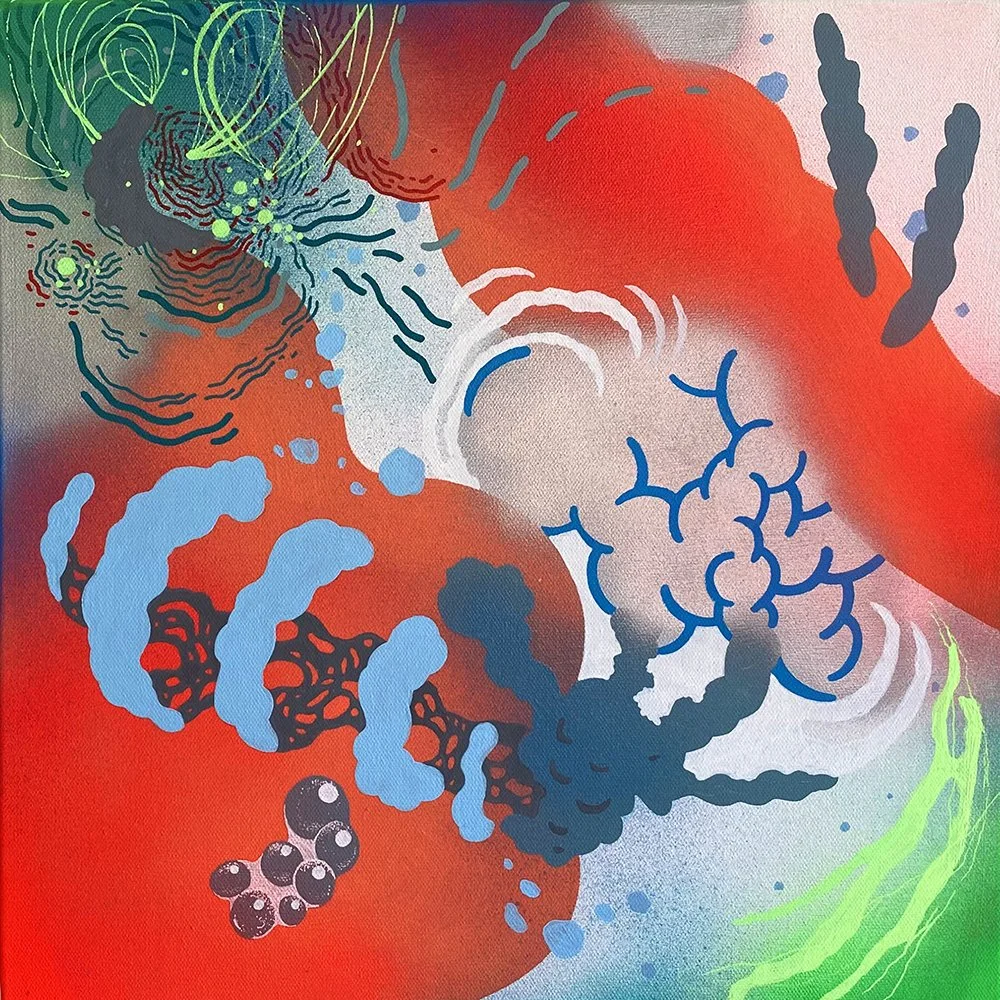
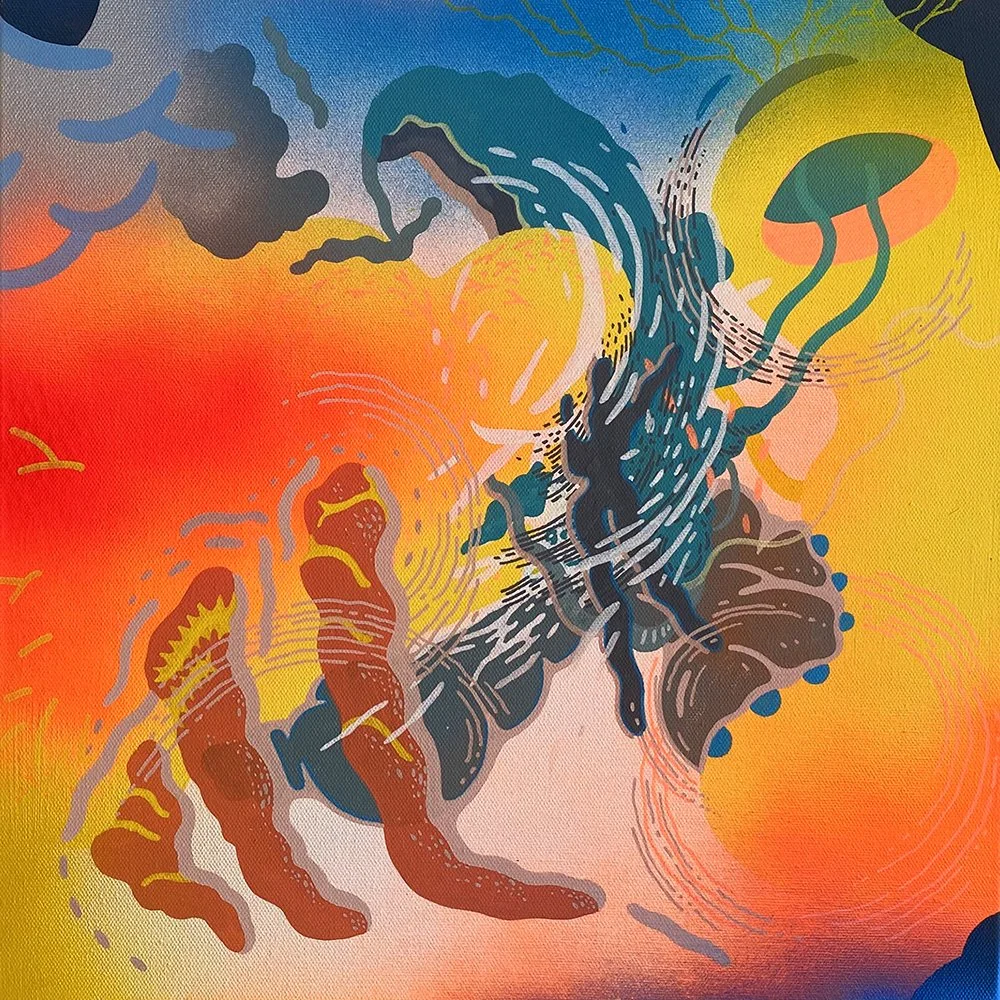
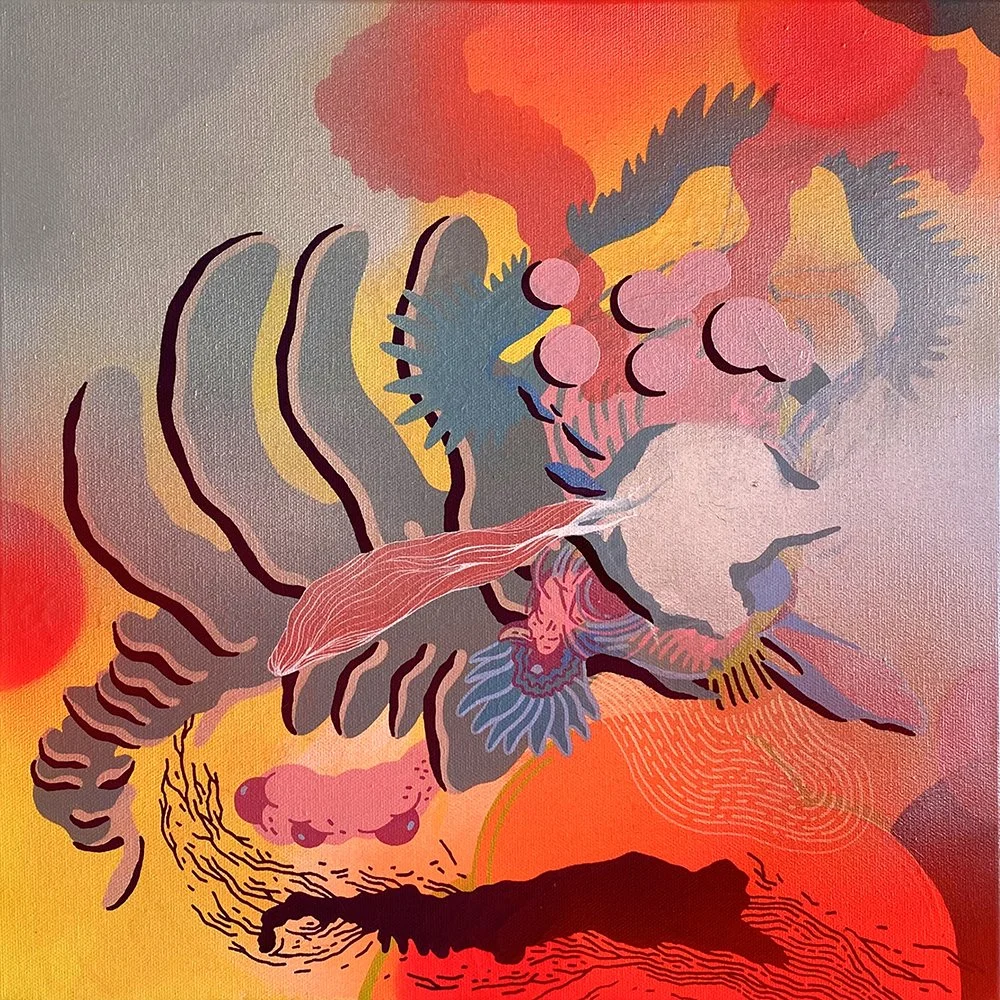
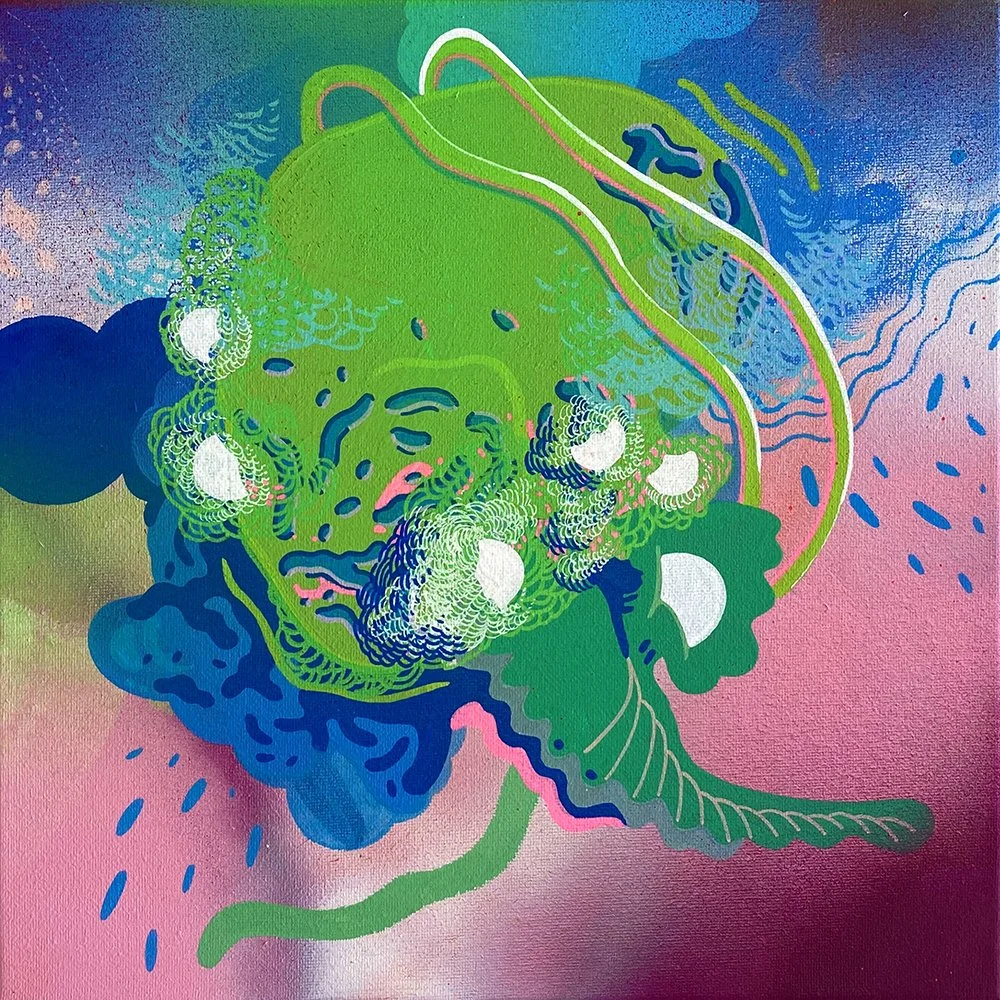
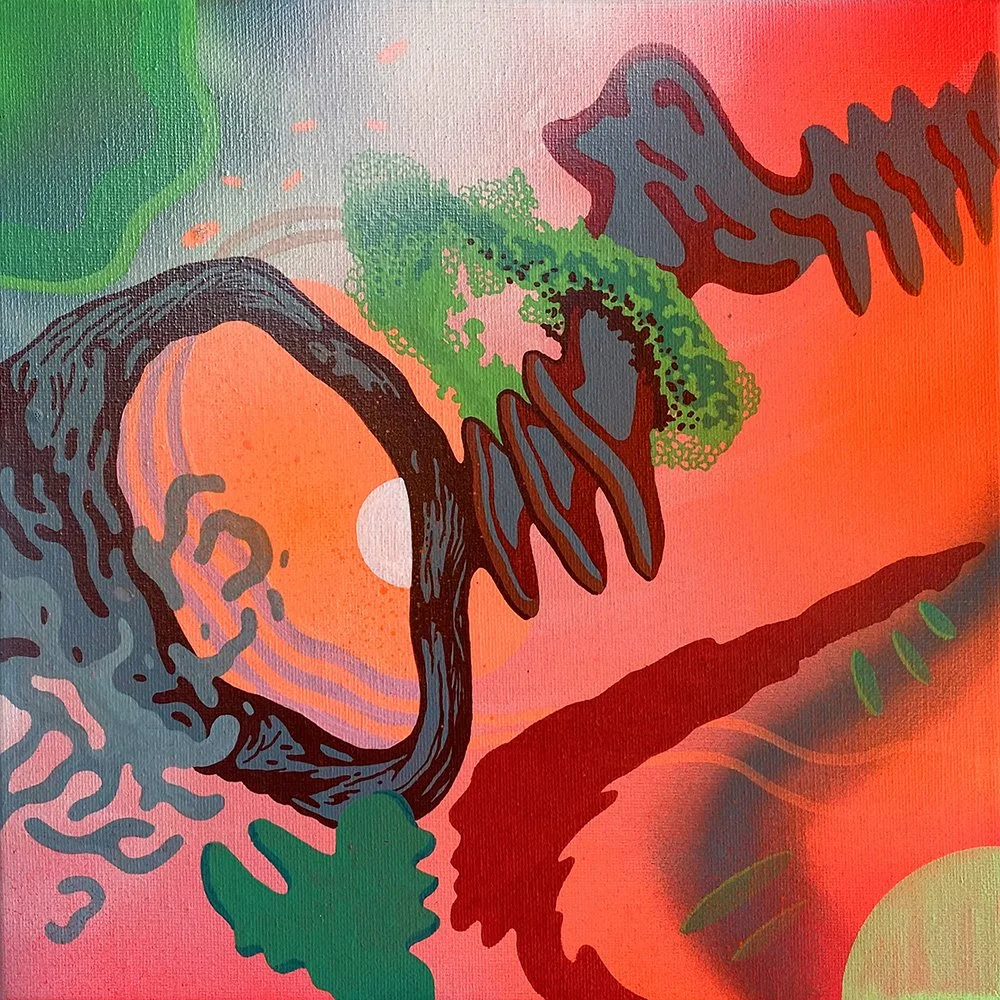
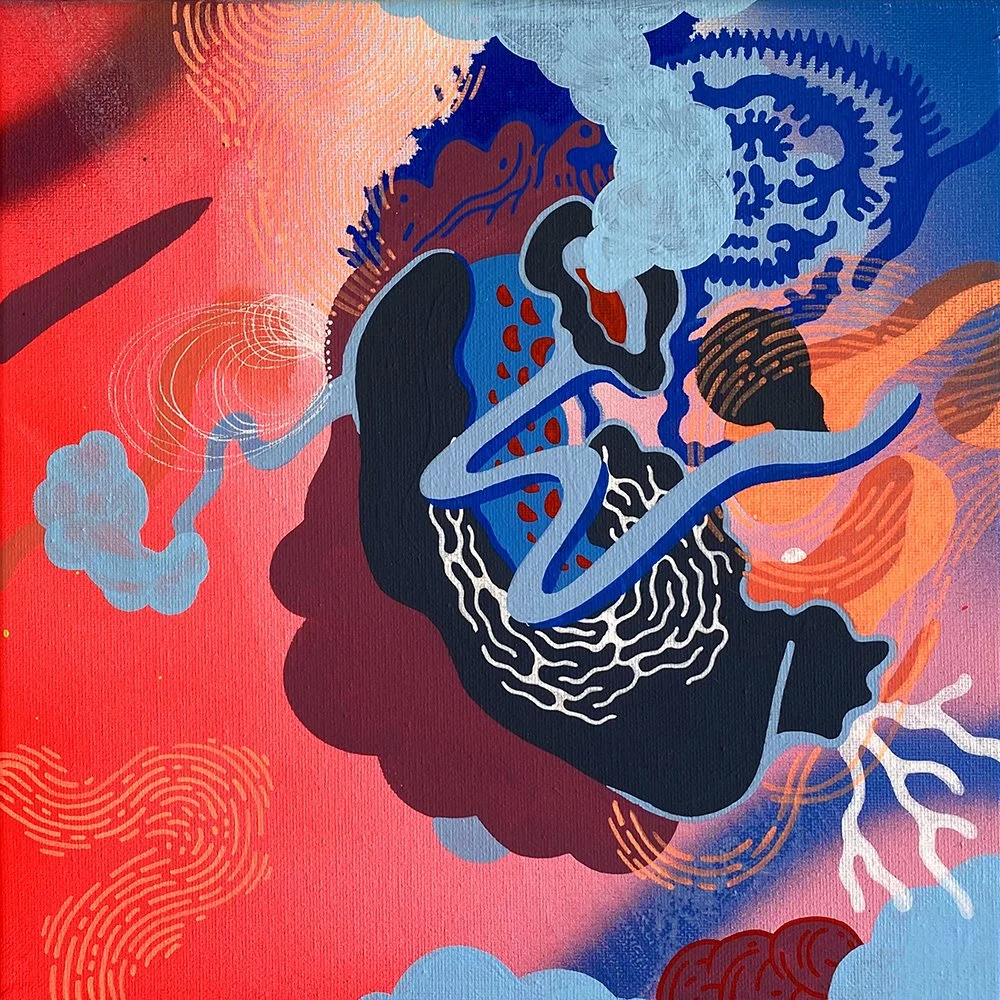
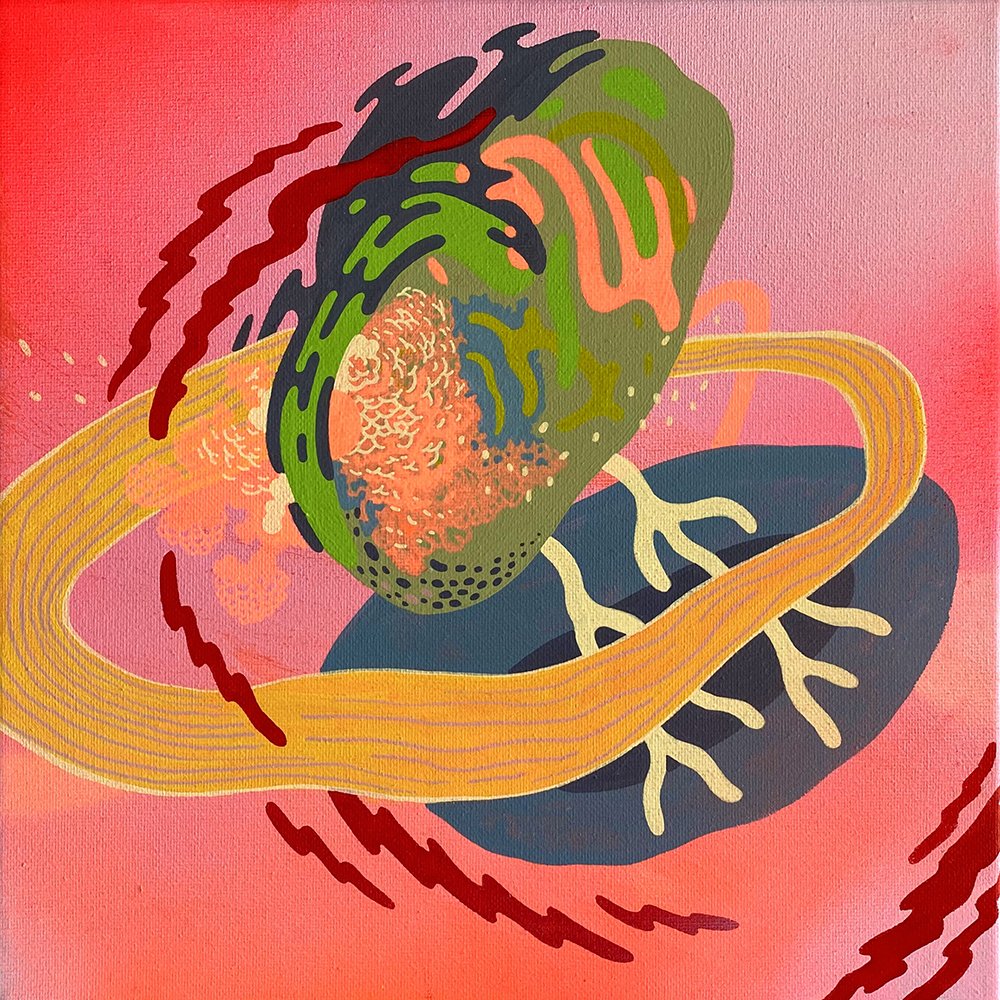
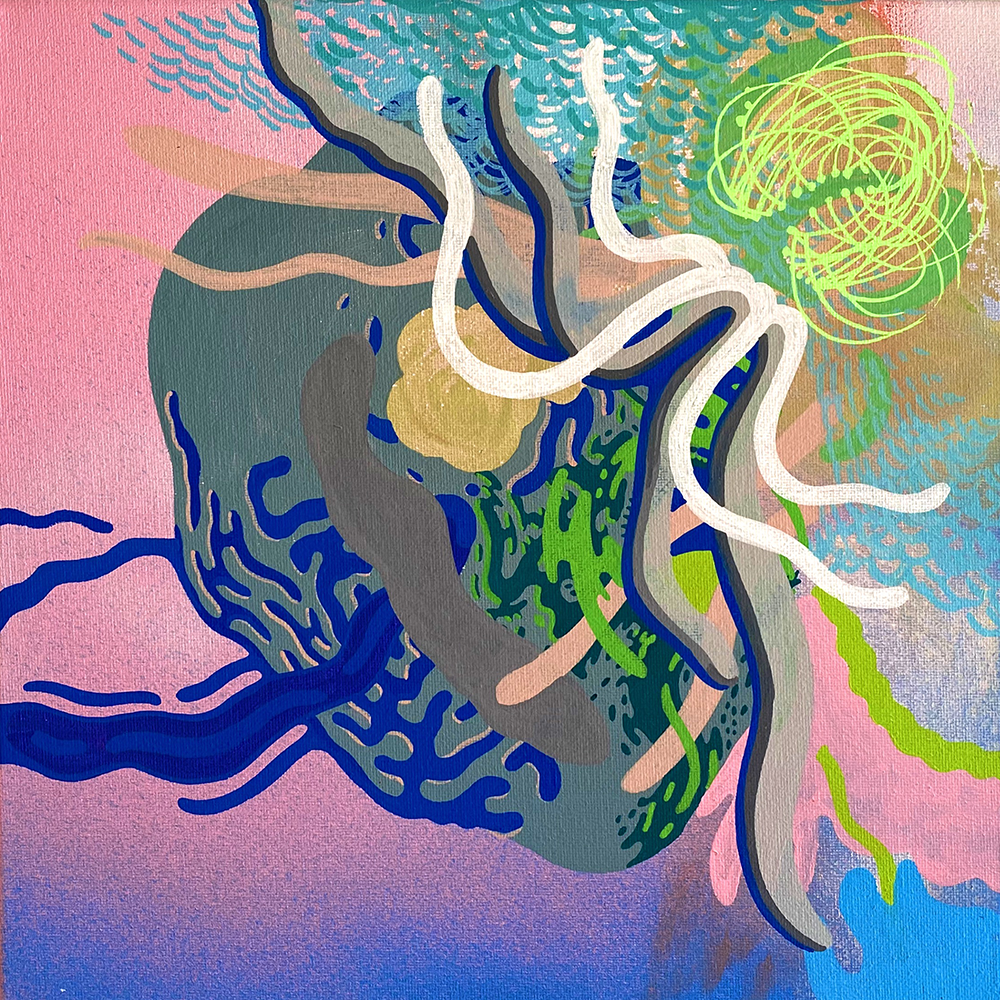
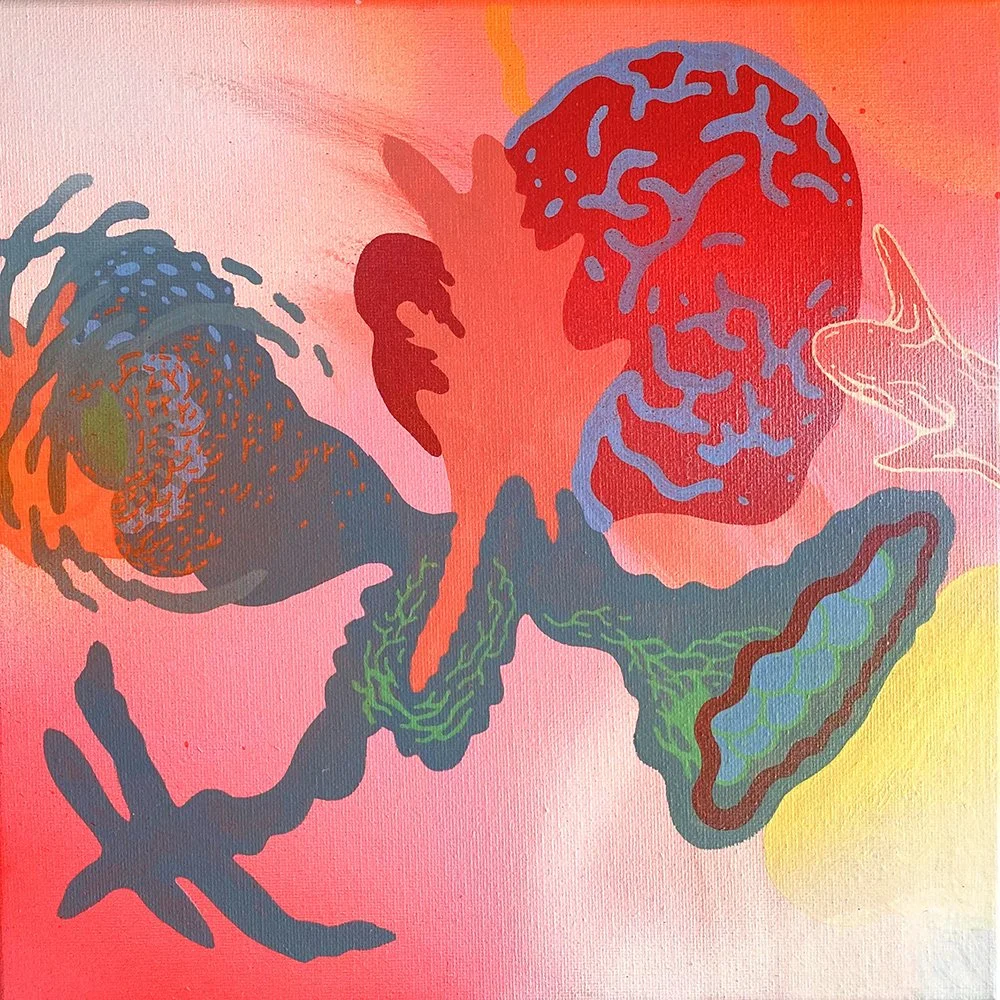
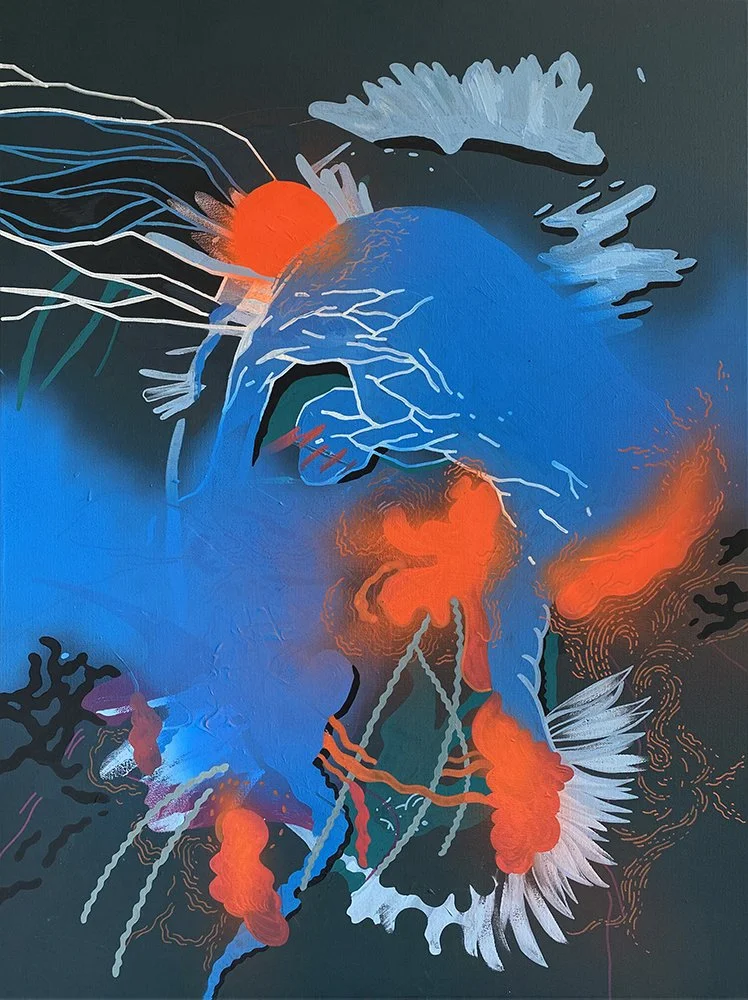
Between 2019 and 2024, Aglaja Ray developed a visually and conceptually distinctive body of work often referred to as her “neon era” — a period marked by intense chromatic saturation, synthetic color palettes, and a heightened, almost hallucinatory visual language.
These works are characterized by the use of luminous, high-contrast colors — acid greens, electric pinks, ultraviolet blues — often combined with UV-reactive materials and glowing surfaces. Figures within these compositions appear hybrid, fragmented, or transformed: cyborg-like bodies, fluid anatomies, and symbolic entities that exist between the organic and the artificial.
Conceptually, this period engages with transhumanism, techno-theology, and speculative futures. The paintings function as visual laboratories, where questions of immortality, digital consciousness, and the merging of human and machine are explored through metaphor and embodiment. Religious iconography, mythological structures, and science fiction aesthetics intersect, creating a layered visual system where ancient belief systems meet emerging technologies.
Rather than presenting fixed narratives, these works operate as immersive fields of perception — environments where meaning is unstable, shifting between seduction and discomfort. The use of neon and artificial light becomes both aesthetic strategy and conceptual device, reflecting a world increasingly mediated by screens, simulation, and hyperreality.
At the same time, the figures often retain traces of vulnerability: despite their augmented or transformed states, they evoke questions of identity, agency, and the limits of human control within technologically driven systems.
This period marks a critical phase in the artist’s development, positioning her practice within broader contemporary discourses on posthumanism and digital culture. It also lays the conceptual groundwork for her later shift toward embodied experience, locality, and the re-examination of human presence beyond technological acceleration.