

TALITA KUM
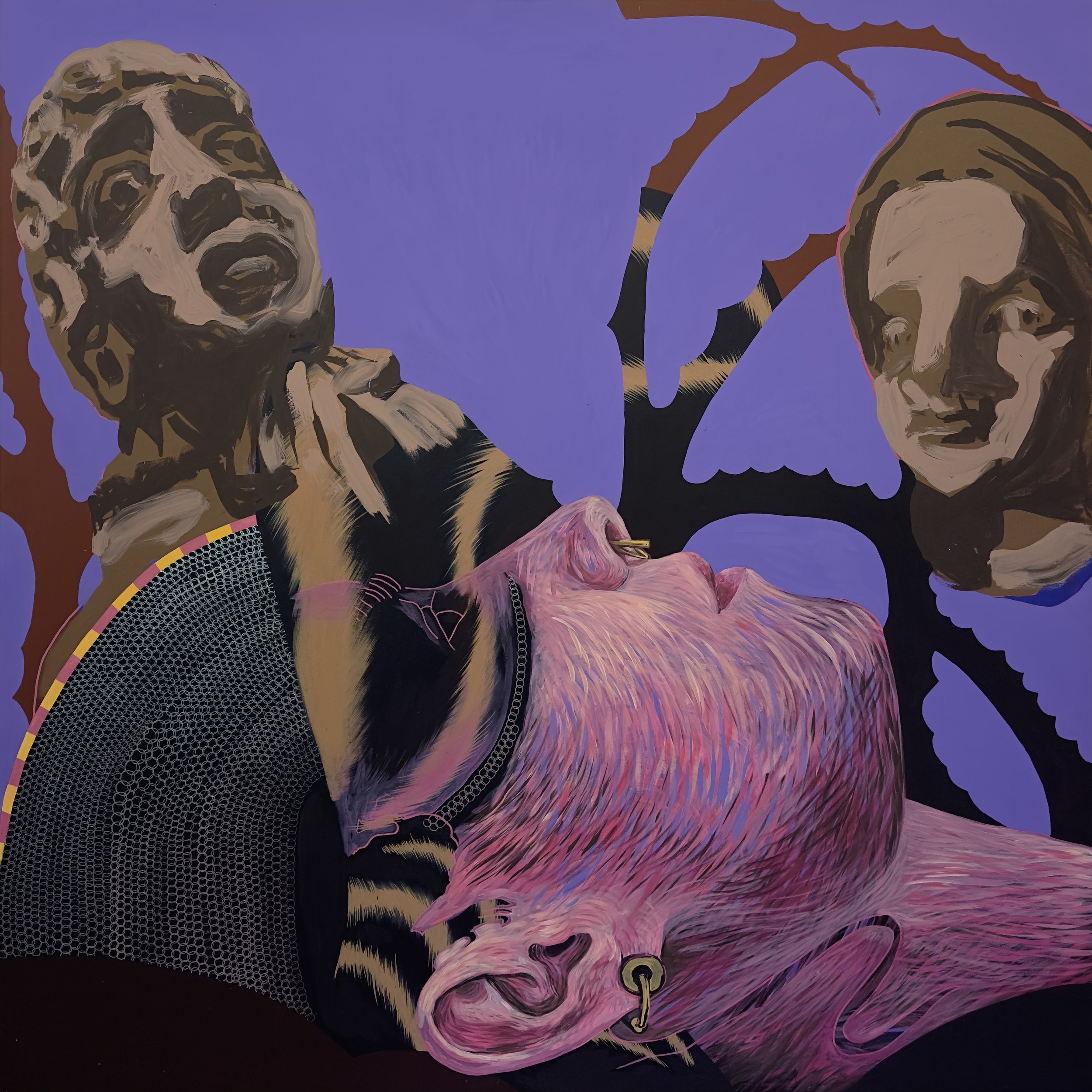
TALITA KUM
150 × 150 cm
Acrylic on canvas
2026
KAIP GIMĖ DARBAS? HOW DID THIS WORK COME INTO BEING?
Šis paveikslas gimė po apsilankymo Višakio Rūdoje. Pirmiausia aplankiau čia įkurtą Liaudies buities muziejų ir susipažinau su jo įkūrėju, kuris taip pat veda rūdos perdirbimo edukacijas, organizuoja menininkų plenerus ir aktyviai puoselėja vietos kultūrinį paveldą. Būtent jis pasiūlė nueiti prie Šaltinėlio, pasivaikščioti miško takais ir aplankyti miške esančią koplyčią.
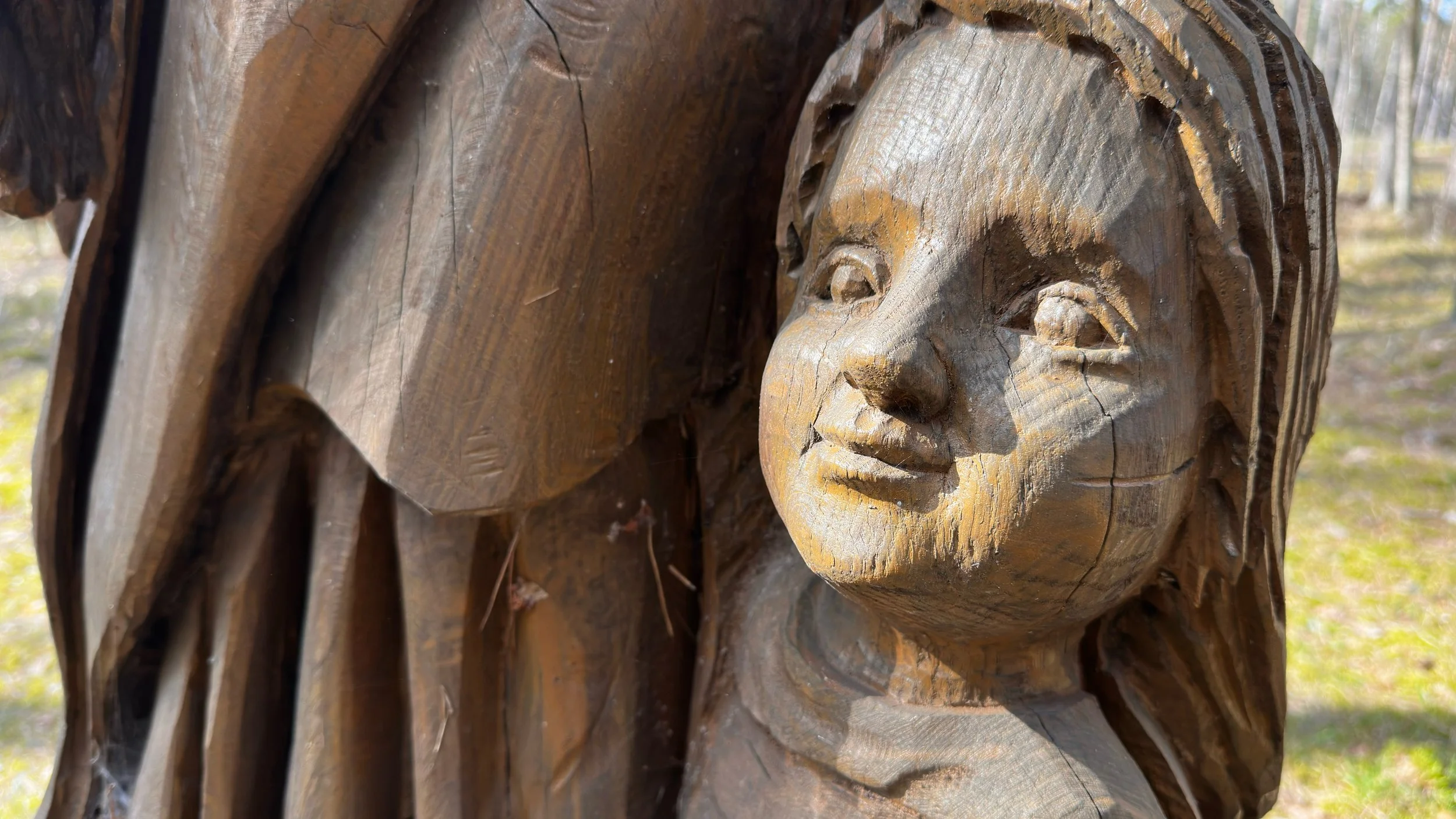
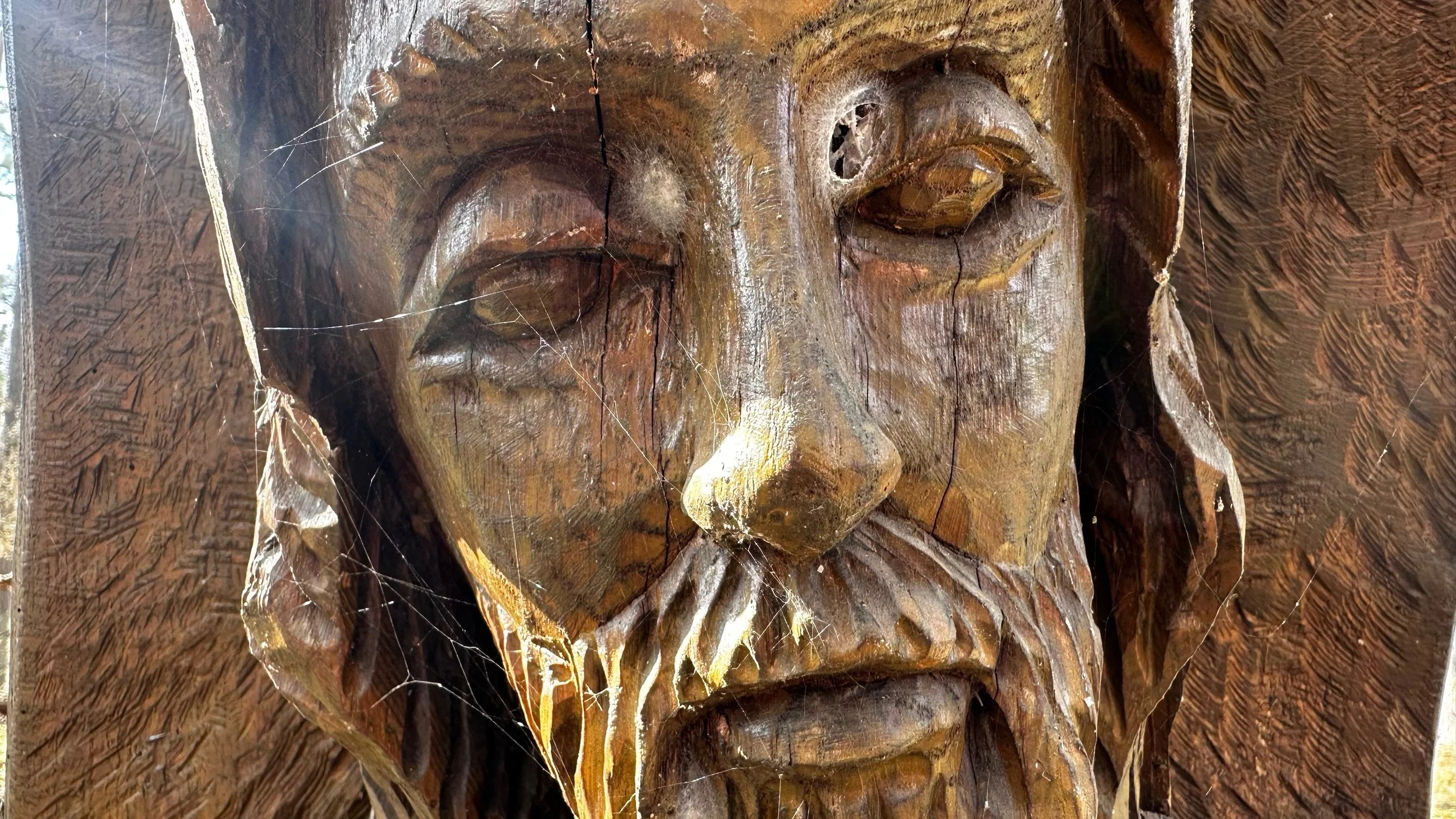
Einant taku link koplyčios mano dėmesį patraukė medinės šventųjų skulptūros. Mane domino ne tik jų religinė simbolika, bet ir jas kūrę žmonės – drožėjai, savo pasaulėžiūrą perteikiantys per medį. Galvojau apie tai, kaip jie mato pasaulį, kas juos įkvepia ir kodėl pasirenka vaizduoti būtent šventuosius.
Tuo pat metu vis dažniau mąsčiau apie pastaraisiais metais sustiprėjusias kalbas apie galimą karą. Žiniasklaidoje ir socialiniuose tinkluose nuolat pasikartojančios naujienos, karinės pratybos Kazlų Rūdoje ir viešoji retorika apie pasirengimą konfliktui kūrė nuolatinį įtampos foną. Norėjosi nuo jo pailsėti, tačiau kartu atrodė neįmanoma apsimesti, kad nieko nevyksta.
Šis paveikslas gimė kaip bandymas šioje įtampoje nukreipti žvilgsnį ne į baimę, o į tai, kas suteikia jėgų. Į tai, kas padeda atsikelti ir eiti pirmyn. | This painting emerged after a visit to Višakio Rūda, a small village in Lithuania. I first visited the local Museum of Folk Life and met its founder, who also leads educational workshops on traditional iron ore processing, organizes artists' plein-air events, and actively preserves the area's cultural heritage. It was he who suggested that I visit the nearby spring, walk the forest trails, and explore the small chapel hidden in the woods.
Along the path leading to the chapel, I encountered a series of wooden sculptures depicting saints and biblical figures. I became interested not only in their religious symbolism, but also in the people who carved them—wood sculptors who express their worldview through timber. I found myself wondering how they perceive the world, what inspires them, and why they choose to depict saints.
At the same time, I found myself thinking more and more about the growing public discourse surrounding the possibility of war. Repeated news reports, military exercises in and around Kazlų Rūda, and the increasingly common rhetoric of preparedness created a constant atmosphere of tension. I longed to step away from that background noise, yet at the same time it felt impossible to pretend that nothing was happening.
This painting emerged as an attempt to redirect my gaze within that tension—not toward fear, but toward what gives strength. Toward what helps us rise and keep moving forward.
KOKĮ KLAUSIMĄ KELIA? WHAT QUESTION DOES IT ASK?
Gyvendama Kazlų Rūdoje vis dažniau pastebėdavau, kad daugelio žmonių kasdienybė sukasi apie darbą, šeimą, buitį ir rūpinimąsi kitais. Pokalbiuose dažnai skambėdavo artėjančios atostogos, namų remontas, sodas, maistas ar vaikų reikalai. Poilsio ir atgaivos dažniausiai buvo ieškoma kelionėse, pramogose ar trumpame atitrūkime nuo kasdienybės.
Tuo pat metu mane supo medinės šventųjų skulptūros, koplyčios ir religinės tradicijos. Tai paskatino susimąstyti ne apie religiją kaip instituciją, bet apie tikėjimą kaip asmeninę patirtį. Ar jis šiandien tebėra vieta, kur žmogus ieško ramybės ir stiprybės? Ar dažniau tampa kultūrine tradicija, paveldėtu ritualu ar įpročiu? Ar tikėjimas vis dar yra gyvas, ar kartais lieka tik jo forma – tarsi medinė šventojo skulptūra?
Paveikslas neieško atsakymo. Jis kviečia paklausti, kur šiandien ieškome atgaivos. Kas mus iš tikrųjų prikelia? Kas suteikia jėgų gyventi toliau, ypatingai stresinėse situacijose ar patiriant sunkumų? | While living in Kazlų Rūda, I increasingly noticed that many people's everyday lives revolved around work, family, household responsibilities, and caring for others. Conversations often turned to upcoming holidays, home renovations, gardening, meals, or children. Rest and relief were most often sought through travel, leisure, or brief escapes from everyday routines.
At the same time, I found myself surrounded by wooden sculptures of saints, chapels, and visible expressions of religious tradition. This led me to reflect not on religion as an institution, but on faith as a personal experience. Is faith still a place where people seek peace and strength? Or has it more often become a cultural tradition, an inherited ritual, or simply a habit? Is faith still alive, or does only its outward form remain—like a carved wooden saint?
The painting does not attempt to answer these questions. Instead, it invites us to reflect on where we seek restoration today. What truly raises us? What gives us the strength to keep going, especially in times of stress, uncertainty, or personal hardship?
KODĖL SVARBUS PROJEKTE? WHY IS IT IMPORTANT WITHIN THE PROJECT?
„Talita Kumi“ yra vienas iš darbų, kuriame susikerta kelios pagrindinės projekto „Mažiau garso – daugiau šviesos“ tyrimo kryptys. Jame susitinka vietos kultūrinis kraštovaizdis, asmeninė patirtis ir klausimas, kur žmogus ieško vidinės atramos gyvenant nuolatinės įtampos fone.
Projekte miškas nėra suvokiamas vien kaip gamtinė erdvė. Jis tampa vieta, kurioje atsiskleidžia vietos istorija, bendruomenės pasaulėžiūra ir žmogaus santykis su savimi. Višakio Rūdoje aptiktos medinės šventųjų skulptūros šiame paveiksle tampa ne etnografiniais objektais, o mąstymo apie tikėjimą, viltį ir dvasinį atsitiesimą atspirties tašku.
„Talita Kumi“ taip pat pratęsia vieną svarbiausių projekto idėjų – sąmoningą dėmesio perkėlimą nuo baimės prie to, kas teikia šviesos. Gyvenant militarizuotame kraštovaizdyje, kuriame karo ženklai tampa kasdienybės dalimi, paveikslas klausia ne kaip išvengti nerimo, bet kaip neprarasti gebėjimo atsikelti ir eiti pirmyn.
Šia prasme „Talita Kumi“ tampa ne tik vienu iš projekto kūrinių, bet ir jo etinės laikysenos išraiška. | Talita Kumi brings together several of the central research strands of Less Noise – More Light. It connects the cultural landscape of the region, personal experience, and the question of where people seek inner strength while living within an atmosphere of continuous tension.
Throughout the project, the forest is understood as more than a natural environment. It becomes a space where local history, community values, and personal experience intersect. The wooden sculptures of saints encountered in Višakio Rūda are not presented as ethnographic objects, but as starting points for reflecting on faith, hope, and spiritual renewal.
The painting also develops one of the project's central ideas: consciously redirecting attention from fear toward what brings light. Within a militarized landscape, where signs of war have become part of everyday life, Talita Kumi asks not how to escape anxiety, but how to preserve the ability to rise and continue.
In this sense, the painting is more than an individual work—it embodies the ethical position that lies at the heart of the entire research project.
TEORINIAI ATSPIRTIES TAŠKAI THEORETICAL REFERENCES
Šio darbo metodas rezonuoja su britų land art menininko Richard Long kūrybine praktika, kurioje vaikščiojimas tampa ne pasirengimu kūriniui, o pačiu kūrybos veiksmu. Long savo praktiką apibūdina taip:
„Menas apie judėjimą, lengvumą ir laisvę. Paprasti kūrybiniai vaikščiojimo ir vietos žymėjimo veiksmai, tyrinėjantys vietą, lokalumą, laiką, atstumą ir matavimą.“
Kaip ir Long kūryboje, vaikščiojimas šiame projekte tampa meninio tyrimo metodu. Tačiau projekto tikslas nėra minimaliai įsiterpti į kraštovaizdį ar jį pažymėti. Priešingai – ilgi pasivaikščiojimai, susitikimai su vietos žmonėmis, fotografijos, vaizdo įrašai ir tekstiniai užrašai tampa medžiaga, iš kurios gimsta tapyba. Kūrinio interpretacija taip pat rezonuoja su Hanso-Georgo Gadamerio hermeneutine samprata apie „horizontų susiliejimą“ (fusion of horizons). Asmeninė patirtis, Višakio Rūdos kultūrinis kraštovaizdis, vietos religinis paveldas ir biblinis pasakojimas apie Jairo dukters prikėlimą čia nesiekia vienos galutinės interpretacijos. Prasmė gimsta jų tarpusavio dialoge ir žiūrovo santykyje su kūriniu. „Talita Kumi“ yra platesnio meninio tyrimo dalis, kurioje vaikščiojimas, vietos pažinimas, dokumentacija ir tapyba tampa lygiavertėmis kūrinio formomis.
Pavadinimas „Talita Kumi“ kilo iš Evangelijos pagal Morkų.
„Paėmęs mergaitę už rankos, jis tarė: „Talita kum“, tai reiškia: „Mergaite, sakau tau, kelkis!“ Ir mergaitė tuojau atsikėlė ir pradėjo vaikščioti.“
(Mk 5, 41–42)
Šiame paveiksle biblinė frazė tampa vidinio pabudimo, vilties ir dvasinio atsitiesimo metafora.
The methodology behind this work resonates with the artistic practice of British land artist Richard Long, for whom walking is not merely a preparation for making art but an artistic act in itself. Long describes his practice as:
"Art about mobility, lightness and freedom. Simple creative acts of walking and marking about place, locality, time, distance and measurement."
As in Long's work, walking functions here as a method of artistic research. However, rather than making minimal interventions in the landscape or leaving physical traces, this project transforms prolonged walks, encounters with local residents, photography, video recordings, and written reflections into the material from which painting emerges. The interpretation of the work also resonates with Hans-Georg Gadamer's hermeneutic concept of the "fusion of horizons." Personal experience, the cultural landscape of Višakio Rūda, local religious heritage, and the biblical narrative of Jairus' daughter intersect without seeking a single definitive interpretation. Meaning emerges through the dialogue between these horizons and through the viewer's own encounter with the work. Talita Kumi forms part of a broader artistic research project in which walking, inhabiting a place, field documentation, and painting are understood as equally significant artistic practices.
The title Talita Kumi is taken from the Gospel of Mark:
"He took her by the hand and said to her, 'Talitha koum!' (which means 'Little girl, I say to you, arise!'). Immediately the girl stood up and began to walk around."
(Mark 5:41–42, NIV)
Within this painting, the biblical phrase is understood not as an illustration of the Gospel narrative but as a metaphor for inner awakening, hope, and spiritual renewal.
VIETOS ISTORIJA LOCAL HISTORY
Paveiksle vaizduojamos medinės šventųjų skulptūros buvo atrastos Višakio Rūdoje – etnografiniame kaime, esančiame apie 10 km į šiaurės vakarus nuo Kazlų Rūdos (54.816° N, 23.435° E). Rašytiniuose šaltiniuose gyvenvietė pirmą kartą paminėta 1701 m., o jos istorija glaudžiai susijusi su balų rūdos gavyba, geležies lydymu ir miškininkyste. Iki 1883 m. čia veikė dvi geležies liejyklos, nuo kurių kilo ir vietovės pavadinimas – „Rūda“, papildytas netoliese tekančio Višakio upelio vardu.
1997 m. Višakio Rūda paskelbta etnografiniu kaimu. Čia iki šiol išlikusi istorinė gatvinio kaimo struktūra, veikia keli buities muziejai, puoselėjamos tradicinės amatų ir kultūros iniciatyvos.
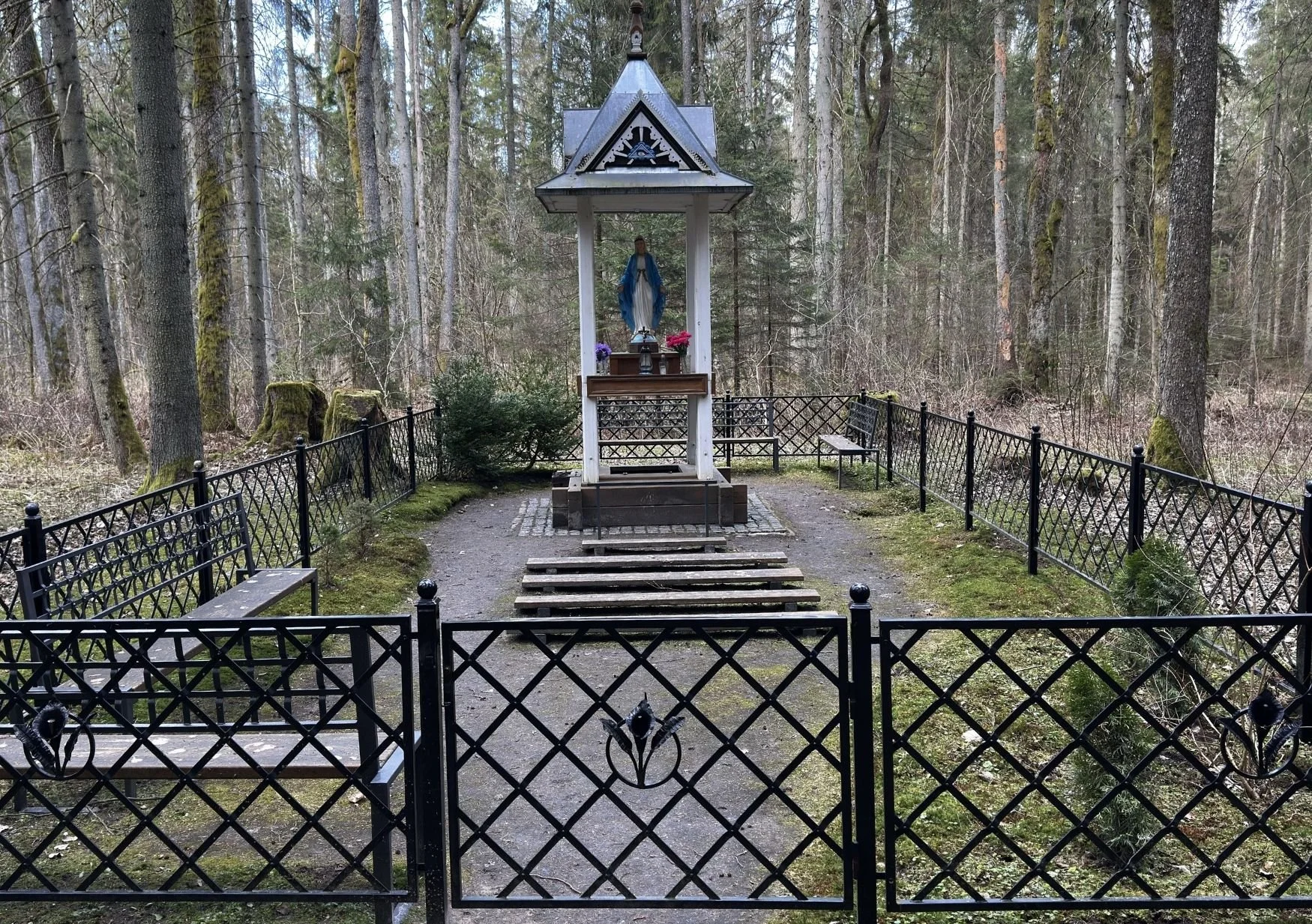
Paveiksle vaizduojamos skulptūros stovi miško take, vedančiame į Višakio Rūdos koplyčią ir Šaltinėlį (Šaltinėlio g. 30). Šis takas jungia gamtinį ir sakralinį kraštovaizdį – lankytojai eina pro vietinių tautodailininkų sukurtas medines šventųjų ir biblinių personažų skulptūras, kol pasiekia koplyčią ir šaltinį, kurie ilgainiui tapo piligrimystės bei vietos bendruomenės susitelkimo vieta.
Šiame projekte šis takas tampa ne tik geografine vieta, bet ir meninio tyrimo erdve, kurioje susitinka vietos istorija, liaudies sakralinis menas ir asmeninė patirtis.
The wooden sculptures depicted in this painting were discovered in Višakio Rūda, an ethnographic village located approximately 10 km northwest of Kazlų Rūda (54.816° N, 23.435° E). The settlement was first mentioned in written sources in 1701 and developed around bog iron extraction, iron smelting, forestry, and woodland industries. Until 1883, two iron foundries operated here, giving the village its name, Rūda ("ore"), combined with the nearby Višakis stream.
In 1997, Višakio Rūda was officially recognised as an ethnographic village. Its historic street layout has been preserved, and today it is known for its folk museums, traditional crafts, and initiatives dedicated to preserving local cultural heritage.
The sculptures portrayed in the painting stand along the forest path leading to the Višakio Rūda Chapel and the Holy Spring (Šaltinėlio Street 30). Along this route, visitors encounter wooden carvings of saints and biblical figures created by local folk artists before reaching the chapel and spring, which have become places of pilgrimage and community gathering.
Within this project, the path functions not only as a geographical location but also as a site of artistic research, where local history, vernacular sacred art, and personal experience converge.
NUOTRAUKOS | PHOTOS

KŪRYBINIS PROCESAS | CREATIVE PROCESS
TYRIMO ĮRAŠAS 06 – VIŠAKIO RŪDA
RESEARCH ENTRY 06 - VIŠAKIO RŪDA
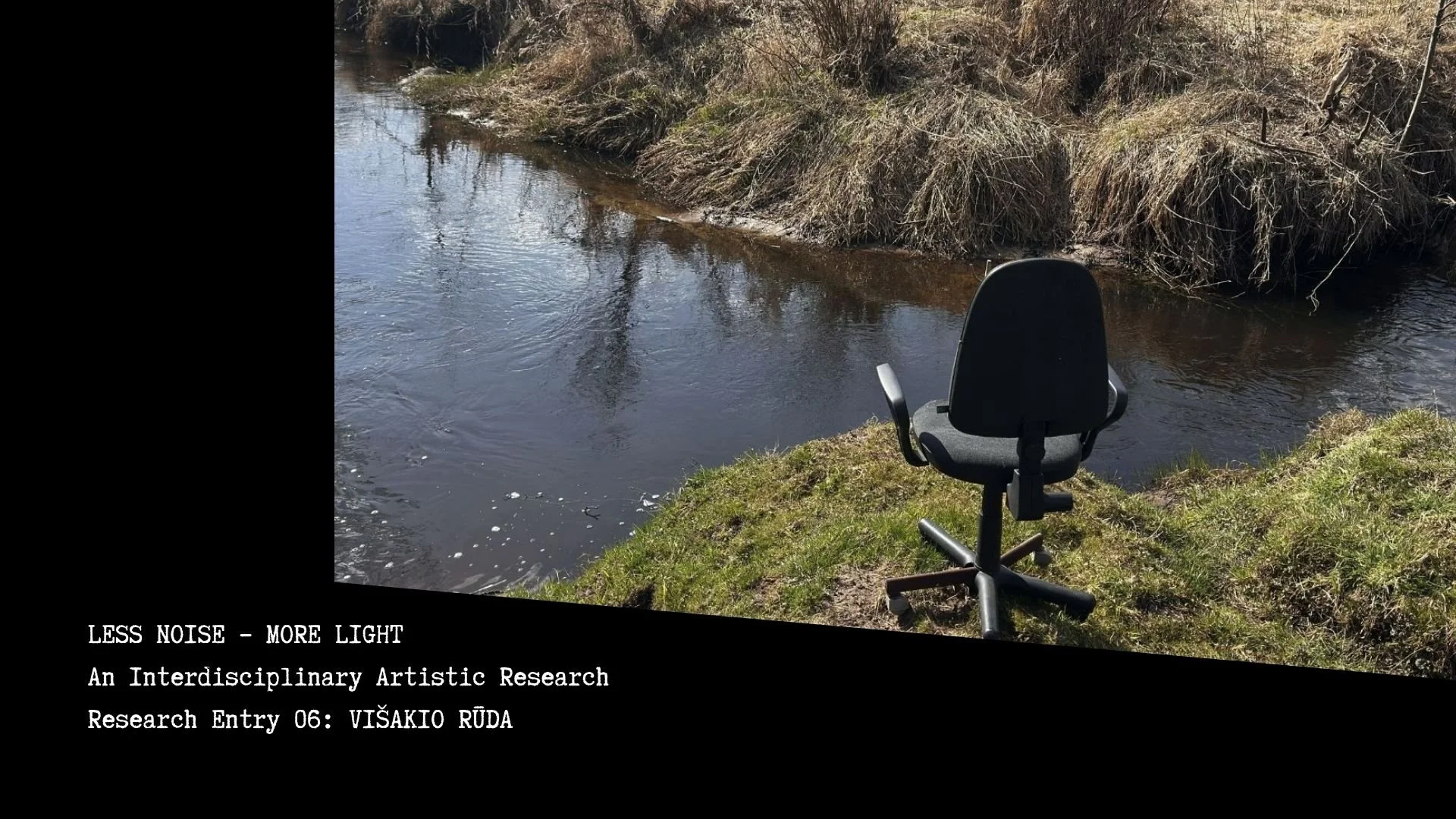
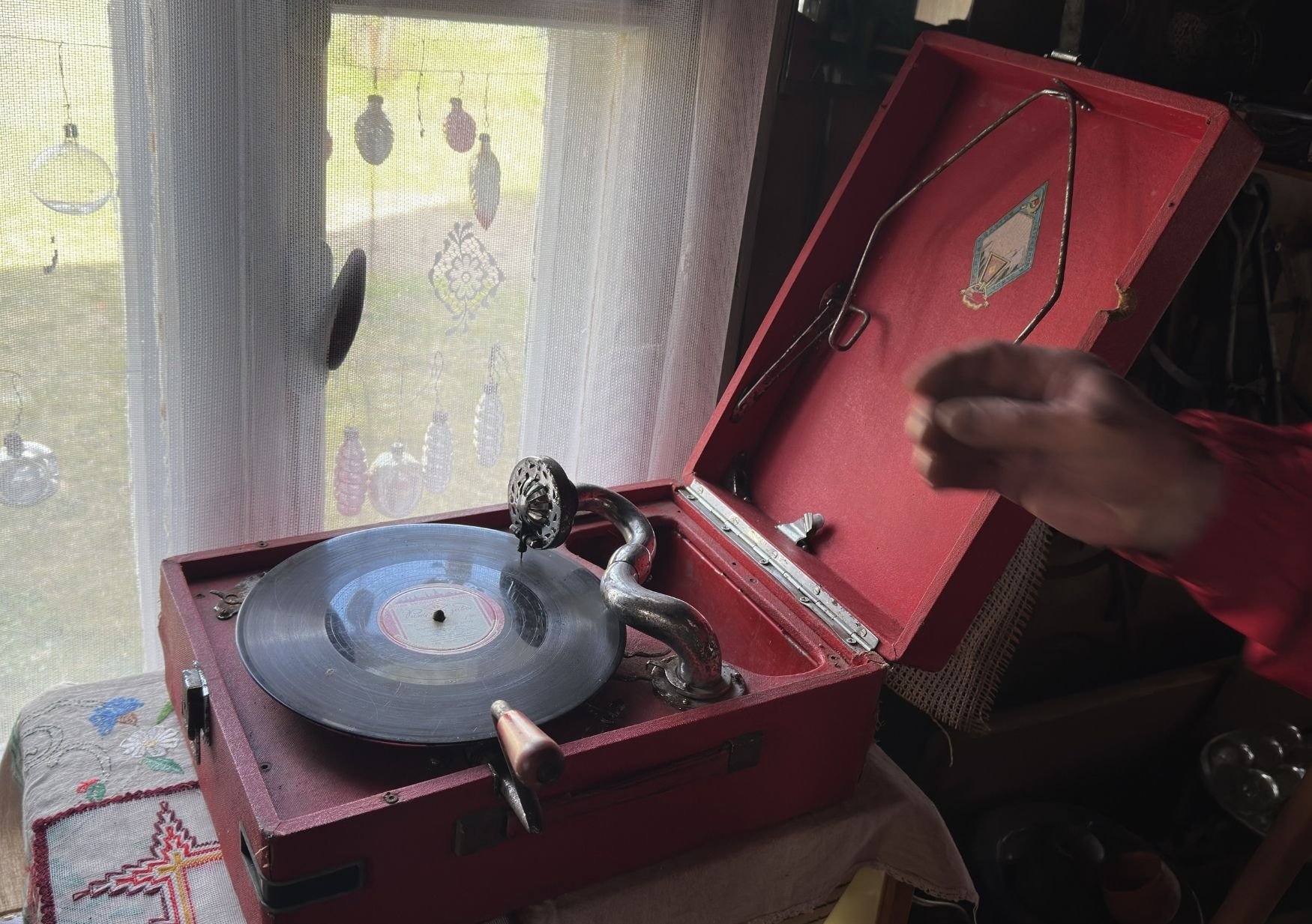
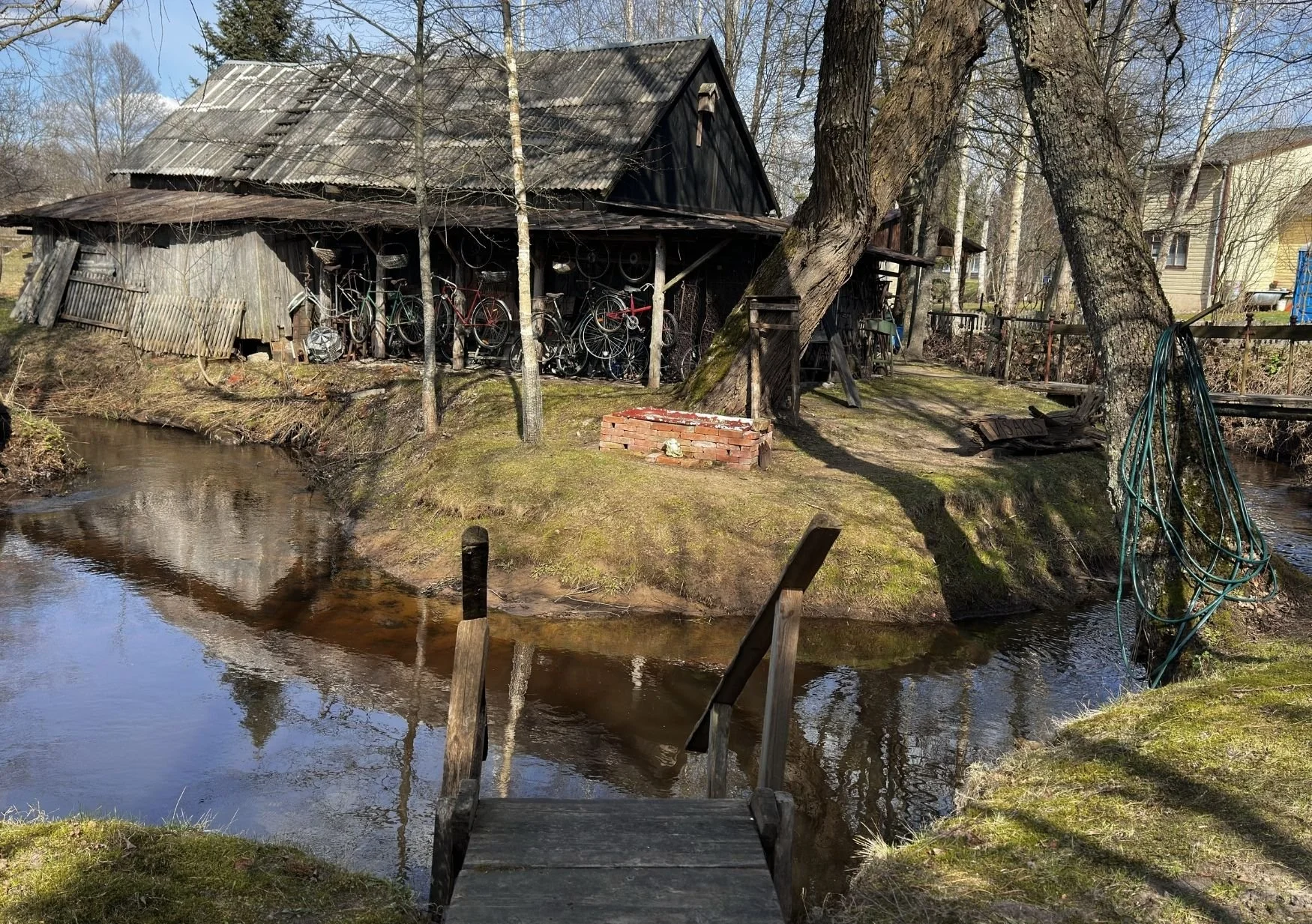
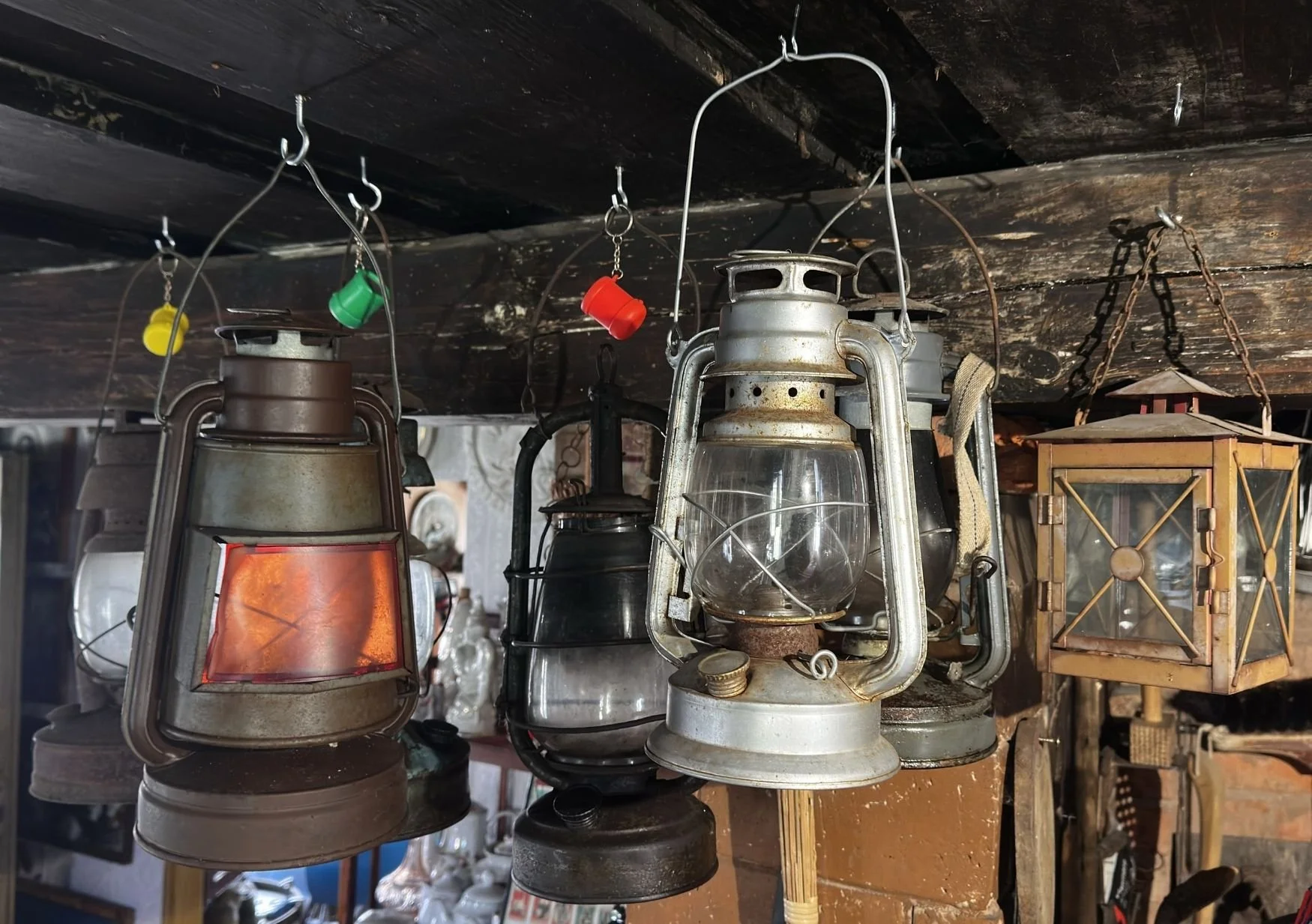
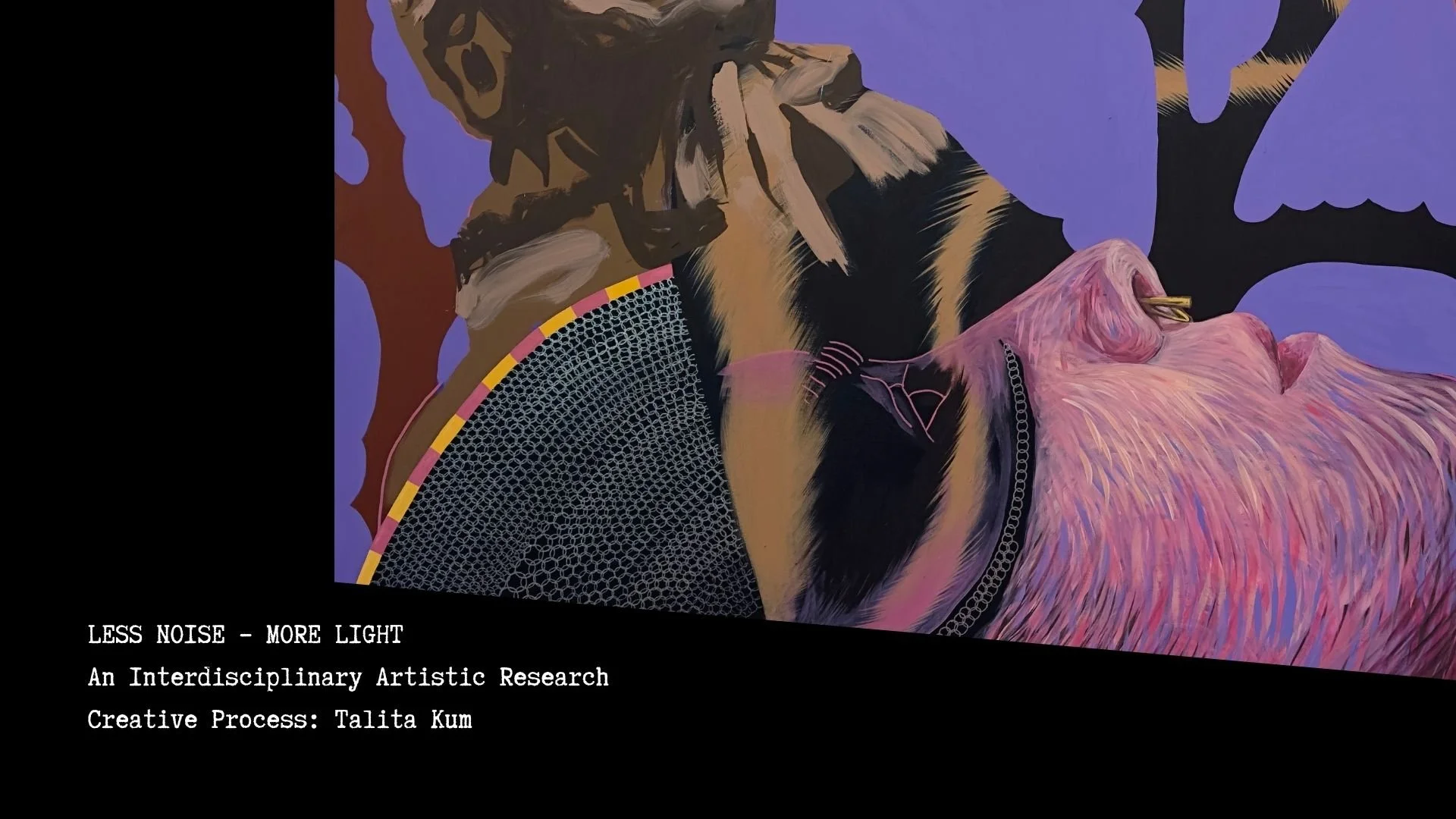
Šiame tyrimo įraše kartu su Augustinu lankomės Višakio Rūdoje. Didžiąją dienos dalį praleidžiame Valdo Arbašausko įkurtame Liaudies buities muziejuje, įsikūrusiame dviejų upelių – Judrės ir Višakio – santakoje. Valdas aprodo daugelį metų kauptą senųjų rakandų, buities daiktų ir įrankių kolekciją, pasakoja apie balų rūdos tradicijas, savo sodybą, kieme įrengtas erdves, bažnyčios gonkas, perkeltas į jo kiemą kaip vietą sustoti, pabūti tyloje ar apmąstymams. Po pokalbio Valdas pasiūlo aplankyti netoliese esantį Šaltinėlį ir miško taką. Būtent ši rekomendacija nuveda mus prie medinių šventųjų skulptūrų, kurios vėliau tampa vienu pagrindinių mano tapybos darbo „Talita Kum“ motyvų. Šis vaizdo įrašas fiksuoja patį meninio tyrimo procesą – kaip kūriniai gimsta iš pokalbių, svetingumo, atsitiktinių rekomendacijų ir žmonių, kurie kasdien saugo vietos atmintį. | In this research entry, Augustinas and I visit the village of Višakio Rūda. We spend most of the day at the Museum of Folk Life founded by Valdas Arbašauskas, located at the confluence of the Judrė and Višakis streams. Valdas guides us through his collection of traditional household objects, tools, and everyday artefacts gathered over many years, while sharing stories about the local bog iron tradition, his homestead, and the spaces he has created around it. Among them is a church porch relocated to his yard—a place for silence, reflection, or simply taking a moment to pause. After a long conversation, Valdas recommends that we visit a nearby spring and the forest trail leading toward it. It is there that we encounter the wooden sculptures of saints that later become one of the central visual motifs in my painting Talita Kum. Rather than documenting a place alone, this video records part of the artistic research process—showing how conversations, generosity, unexpected recommendations, and the people who preserve local memory gradually become part of the work itself.
GARSAS | SOUND
POEZIJA | POETRY
KELKIS
Kažkur tarp rakandų,
apdulkėjus už sofos,
gulėjo malda.
Tiesiog užmiršta.
„Nėra laiko.“
Gal po darbų.
Po bulvių.
Po vaikų.
Po laidotuvių.
Po remonto.
Po komunijos.
Po algos.
Po ligos.
Po skyrybų.
Po visko.
O gal išdrošiu stabelį
ir lyg Golemui
įdėsiu žodį į lūpas,
ir jis padarys
už mane visus darbus.
Gal Siri.
Miške tyliai sėdi
parimę mediniai šventieji.
Klausosi.
Kad reikia ruoštis.
Kad reikia pirkti.
Kad reikia slėptis.
Kad reikia laukti.
Karas
kažkodėl
visada ateina
per televizorių.
Ir tada staiga
ateina tas keistas noras
nusiplauti veidą.
Lyg būtų galima
išsiplauti
ir smegenis.
Kažkas
visai negarsiai
ištaria:
Talita kum.
Ir kaip tik tada
virš galvos
praskrenda naikintuvas.
(Višakio Rūda, 2026)
ARISE
Somewhere among old household things,
behind a sofa,
covered in dust,
lay a prayer.
Not dead.
Simply forgotten.
"No time."
Maybe after work.
After digging potatoes.
After the children.
After the funeral.
After the renovation.
After First Communion.
After payday.
After the illness.
After the divorce.
After everything.
Or maybe I'll carve a little saint,
like the Golem,
place a word inside its mouth,
and let it do
all the work for me.
Maybe Siri.
In the forest,
wooden saints
sit quietly,
leaning forward.
Listening.
That we must prepare.
That we must buy.
That we must hide.
That we must wait.
War,
for some reason,
always arrives
through television.
And then, suddenly,
comes that strange desire
to wash my face.
As if it were possible
to wash away
my mind as well.
Someone,
almost in a whisper,
says:
Talita kum.
And at that very moment,
a fighter jet
passes overhead.
(Višakio Rūda, 2026)