

MOTERIS PRIE ŠULINIO | WOMAN AT THE WELL
MOTERIS PRIE ŠULINIO | WOMAN AT THE WELL
Dyptich; 2 × 50 × 100 cm
Acrylic and oil paints on canvas
2025
KAIP GIMĖ DARBAS? HOW DID THIS WORK COME INTO BEING?
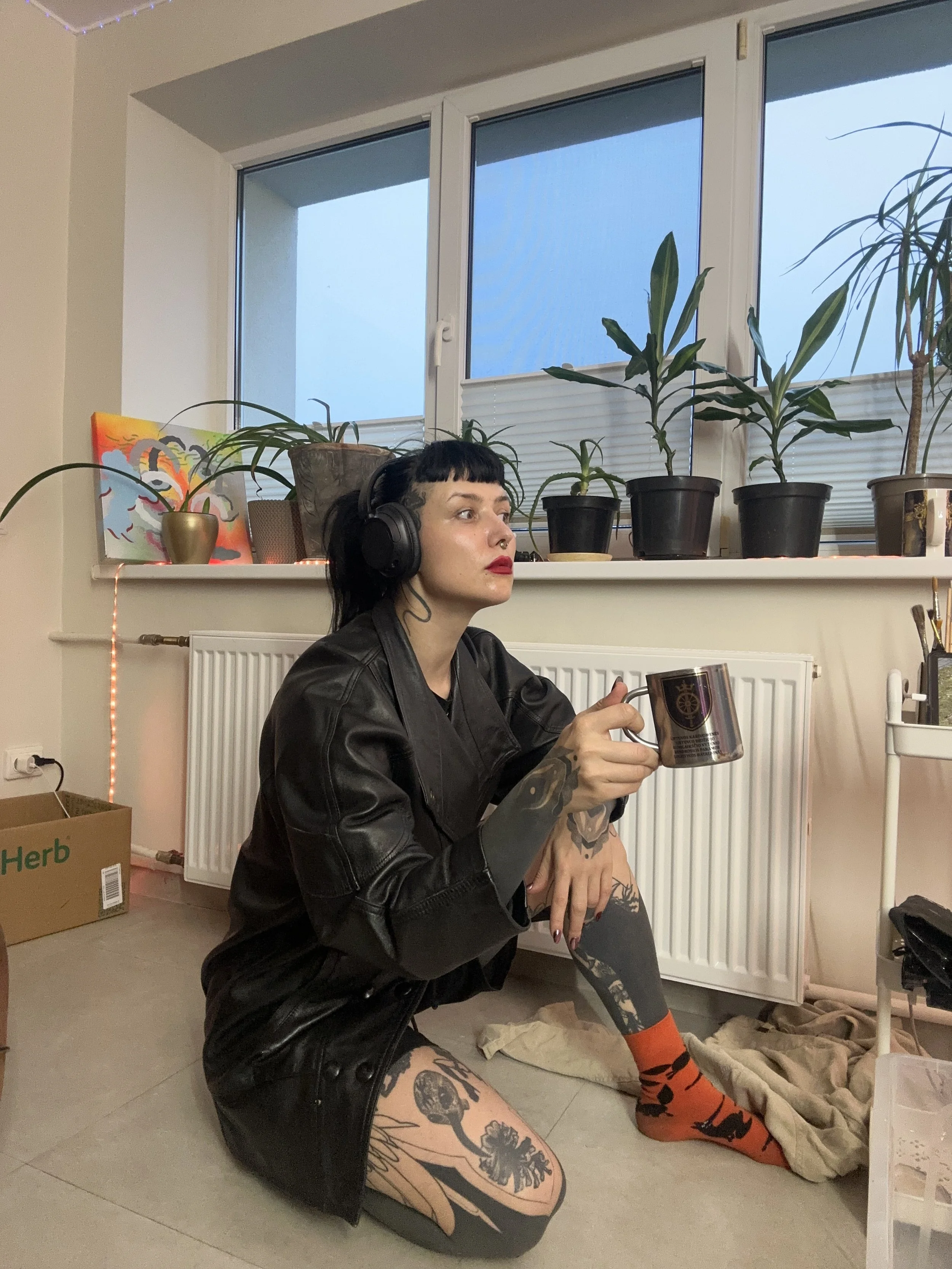
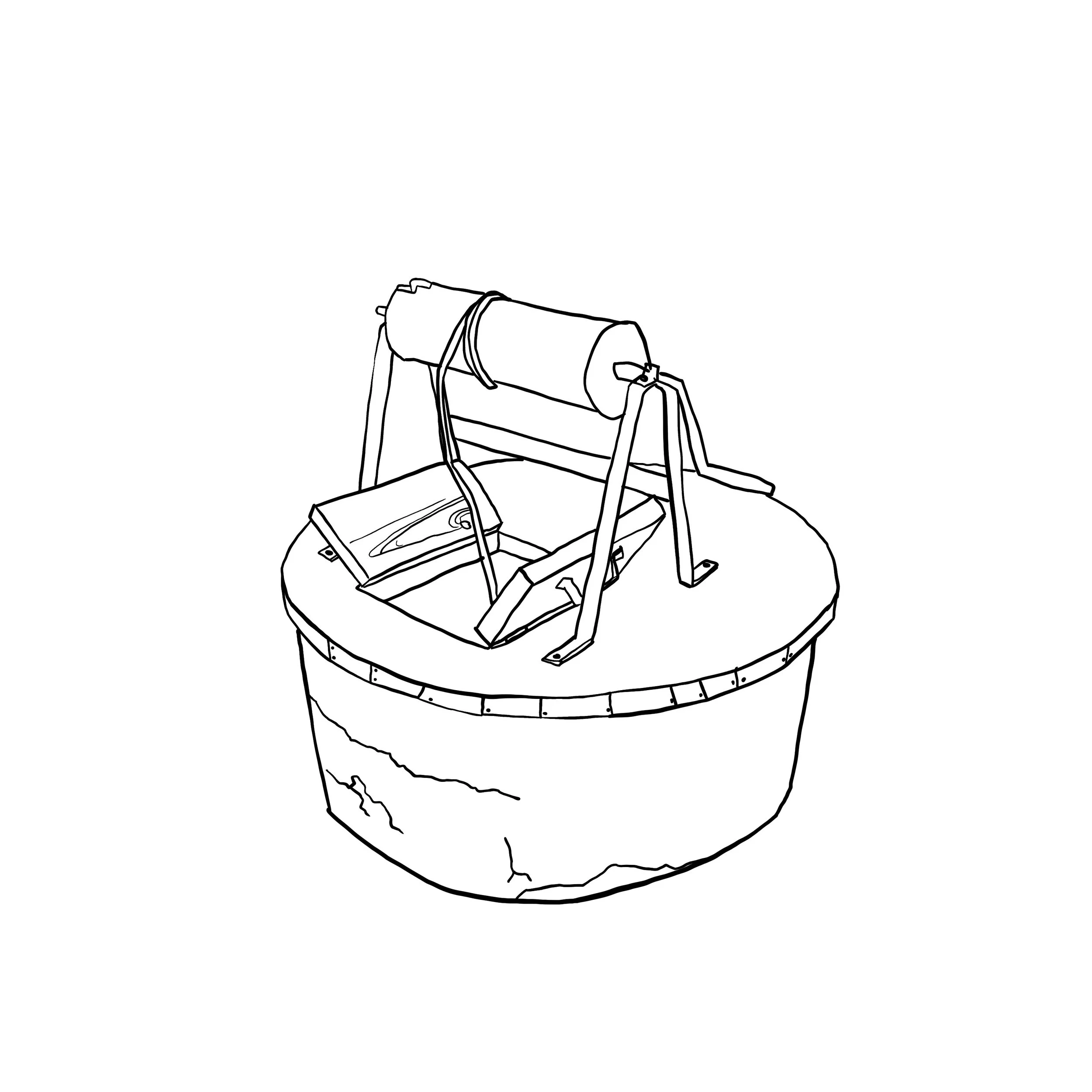
Šis paveikslas gimė po daugiau nei aštuonių mėnesių gyvenimo Kazlų Rūdoje. Netoli namų, kuriuose apsigyvenau, stovi senas šulinys. Kasdien eidama pro jį jaučiau vis stipresnį norą jį nutapyti, nors realistinis vaizdavimas niekada nebuvo mano pagrindinė kūrybos kryptis. Tuo metu vis dažniau mąsčiau apie autentiškumą, pašaukimą ir tai, ką šiandien dar gali sukurti tik žmogus. Dirbtinio intelekto amžiuje beveik viską galima sugeneruoti ar nukopijuoti, tačiau niekas negali atkartoti žmogaus išgyventos patirties. Ši mintis tapo vienu svarbiausių šio kūrinio impulsų. Paveikslas gimė netikėtai – per vieną savaitgalį, be išankstinio plano. Į jį natūraliai sugulė mane supanti aplinka: šulinys prie namų, brolio dovanotas puodelis, „The Sims“ žaidimo deimantas, simbolizuojantis išsekimą, ir Evangelijos pagal Joną pasakojimas apie moterį prie šulinio. Kūrinys tapo savotiška mano vidinės būsenos fotografija – troškimo atgauti jėgas, neprarasti vilties ir priimti savo gyvenimo istoriją.| This painting emerged after more than eight months of living in Kazlų Rūda. Near the house where I live stands an old well. Every day I walked past it, I felt an increasingly strong desire to paint it, even though realism has never been the primary direction of my artistic practice. During that period, I found myself reflecting more and more on authenticity, vocation, and what can still be created only by a human being. In the age of artificial intelligence, almost everything can be generated or imitated, yet no one can reproduce a person's lived experience. That realization became one of the central impulses behind this work. The painting came into being unexpectedly—over the course of a single weekend, without a predetermined plan. It naturally absorbed elements of my everyday surroundings: the well beside my home, the mug my brother gave me, the red Sims diamond symbolizing exhaustion, and the Gospel of John’s story of the Woman at the Well. The work became a kind of portrait of my inner state—a longing to regain strength, not to grow weary of life, and to embrace my own story.
KOKĮ KLAUSIMĄ KELIA? WHAT QUESTION DOES IT ASK?
Kur šiandien ieškome to, kas gali numalšinti mūsų troškulį? Ar jėgų, prasmės ir tapatybės ieškome išoriniame pasaulyje, ar esame pasirengę sustoti ir pažvelgti į savo vidų? Ką reiškia būti autentiškam laikais, kai beveik viską galima imituoti, atkurti ar sugeneruoti? Paveikslas kviečia apmąstyti ne tik dvasinio troškulio temą, bet ir klausimą, ar mūsų pačių istorija gali tapti neišsenkančiu kūrybos šaltiniu. |
Where do we seek what can truly satisfy our thirst today? Do we search for strength, meaning, and identity in the external world, or are we willing to pause and look within? What does it mean to remain authentic in an age when almost anything can be imitated, recreated, or generated? The painting invites viewers to reflect not only on spiritual thirst, but also on whether our own lived experience can become an inexhaustible source of artistic creation.
KODĖL SVARBUS PROJEKTE? WHY IS IT IMPORTANT WITHIN THE PROJECT?
„Moteris prie šulinio“ yra pirmasis kūrinys, kuriame mano gyvenimas Kazlų Rūdoje tiesiogiai tampa kūrybos medžiaga. Jame pirmą kartą sąmoningai į tapybą įtraukiu realią vietą – šulinį prie namų, kuriuose gyvenu, o pati tampu pagrindine paveikslo veikėja. Šis darbas žymi reikšmingą kūrybinį lūžį. Pirmą kartą tapau aliejiniais dažais, pasitelkiu realistinį vaizdavimą ir autobiografinį pasakojimą. Nors tuo metu projektas dar nebuvo įvardytas kaip meninis tyrimas, būtent šiame paveiksle susiformuoja pagrindiniai klausimai, kurie vėliau tampa projekto „Mažiau garso – daugiau šviesos“ ašimi. Po kelių mėnesių šiam tęstiniam tyrimui buvo skirta Lietuvos kultūros tarybos individuali stipendija.|
Woman at the Well is the first work in which my life in Kazlų Rūda becomes the direct material of my artistic practice. For the first time, I deliberately incorporate a real place—the well beside the house where I live—while making myself the central figure of the painting. The work marks a significant turning point in my artistic practice. Here, I used oil paint for the first time and consciously combined realism with autobiographical narrative. Although the project had not yet been formally defined as artistic research, this painting introduces the central questions that would later become the foundation of Less Noise – More Light. A few months later, the continuation of this research was supported by an individual grant from the Lithuanian Council for Culture.
KONTEKSTAI I CONTEXTS
Šis paveikslas gimė iš klausimo, kas šiandien dar gali būti autentiška. Dirbtinio intelekto ir neribotos vaizdų reprodukcijos laikais beveik viską galima sugeneruoti, imituoti ar nukopijuoti. Tačiau žmogaus išgyventa patirtis lieka nepakartojama. Todėl asmeninė istorija šiame kūrinyje tampa ne iliustracija, o pagrindine kūrybos medžiaga. Kūrinys remiasi Henk Borgdorff plėtojama meno kaip pažinimo samprata, kurioje meninė praktika suvokiama ne kaip teorijos iliustracija, bet kaip savarankiškas žinių kūrimo būdas.
"Whoever drinks the water I give them will never thirst. Indeed, the water I give them will become in them a spring of water welling up to eternal life."
(John 4:14)
Biblical Narrative
John 4:1–42 ; John 4:14
Authenticity
In the age of artificial intelligence and endless image reproduction, lived experience remains irreproducible. This work begins from the conviction that personal testimony cannot be generated, copied, or replaced.
Artistic Research
The work resonates with Henk Borgdorff's understanding of artistic research, in which artistic practice becomes a way of producing knowledge rather than illustrating pre-existing ideas.
Phenomenology of Place
Rather than depicting an imagined biblical setting, the painting emerges from direct, lived experience of a real place. The well beside the artist's home becomes both a physical location and a site of personal transformation.
VIETOS ISTORIJA LOCAL HISTORY
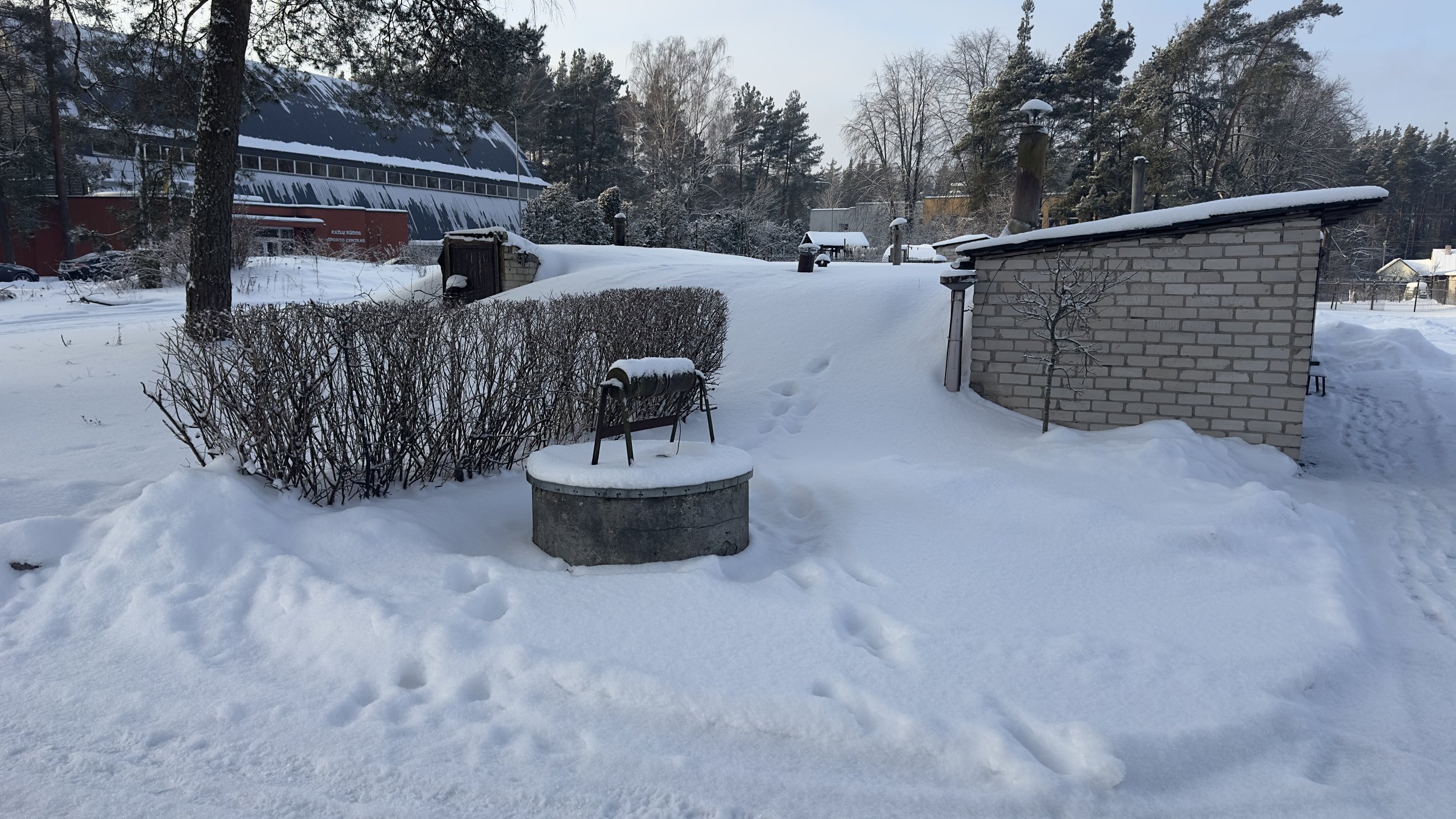
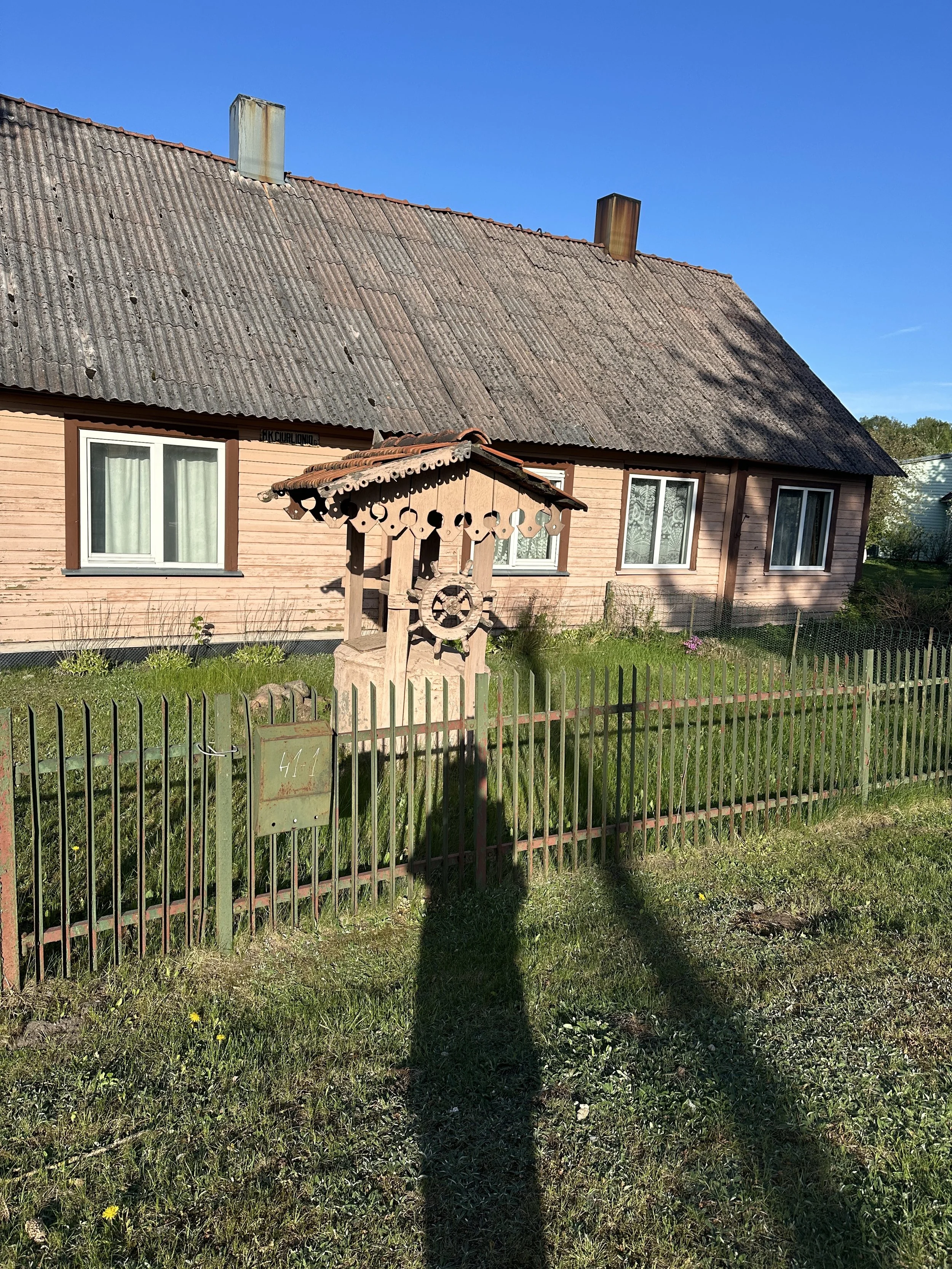
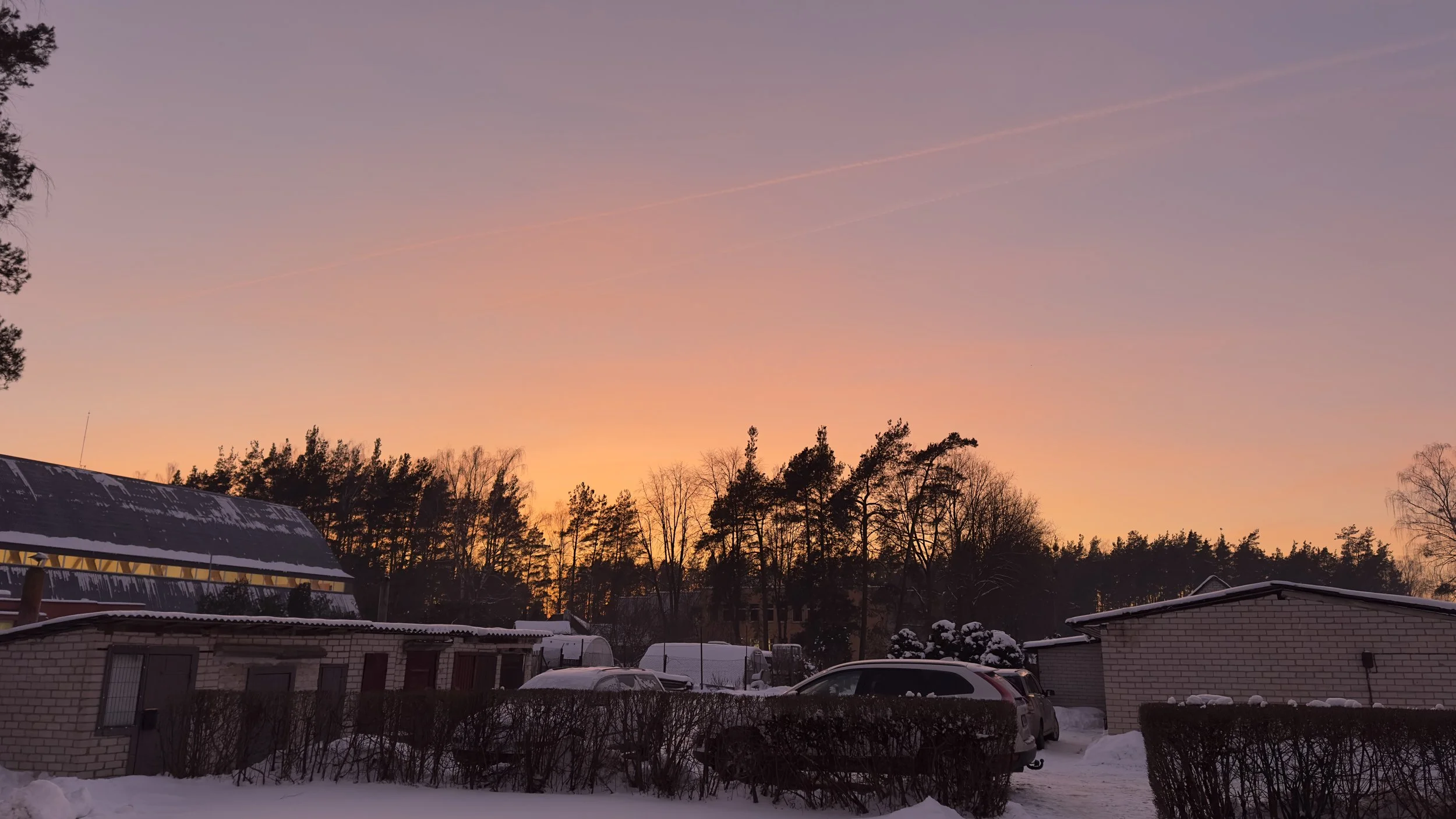
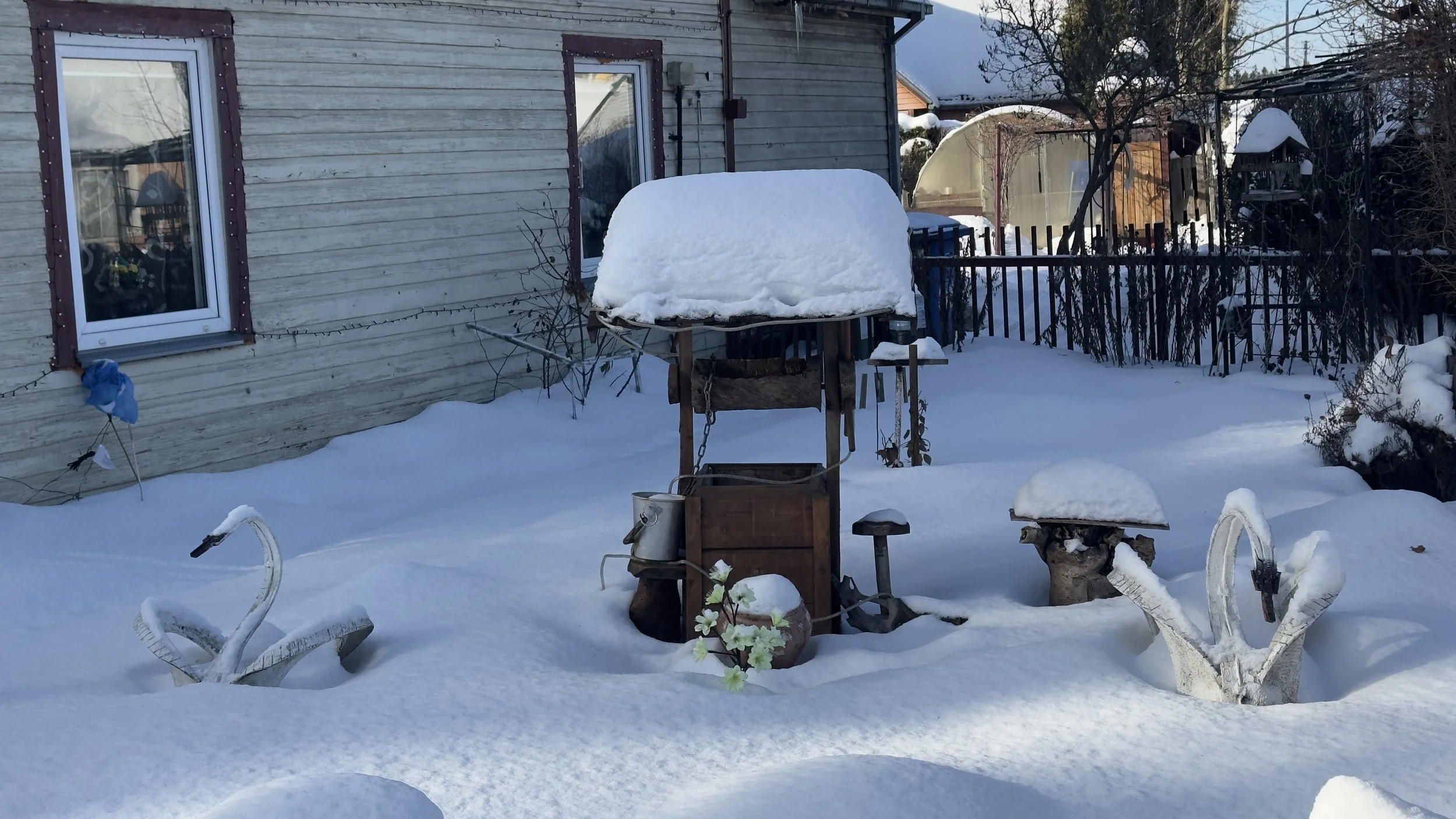
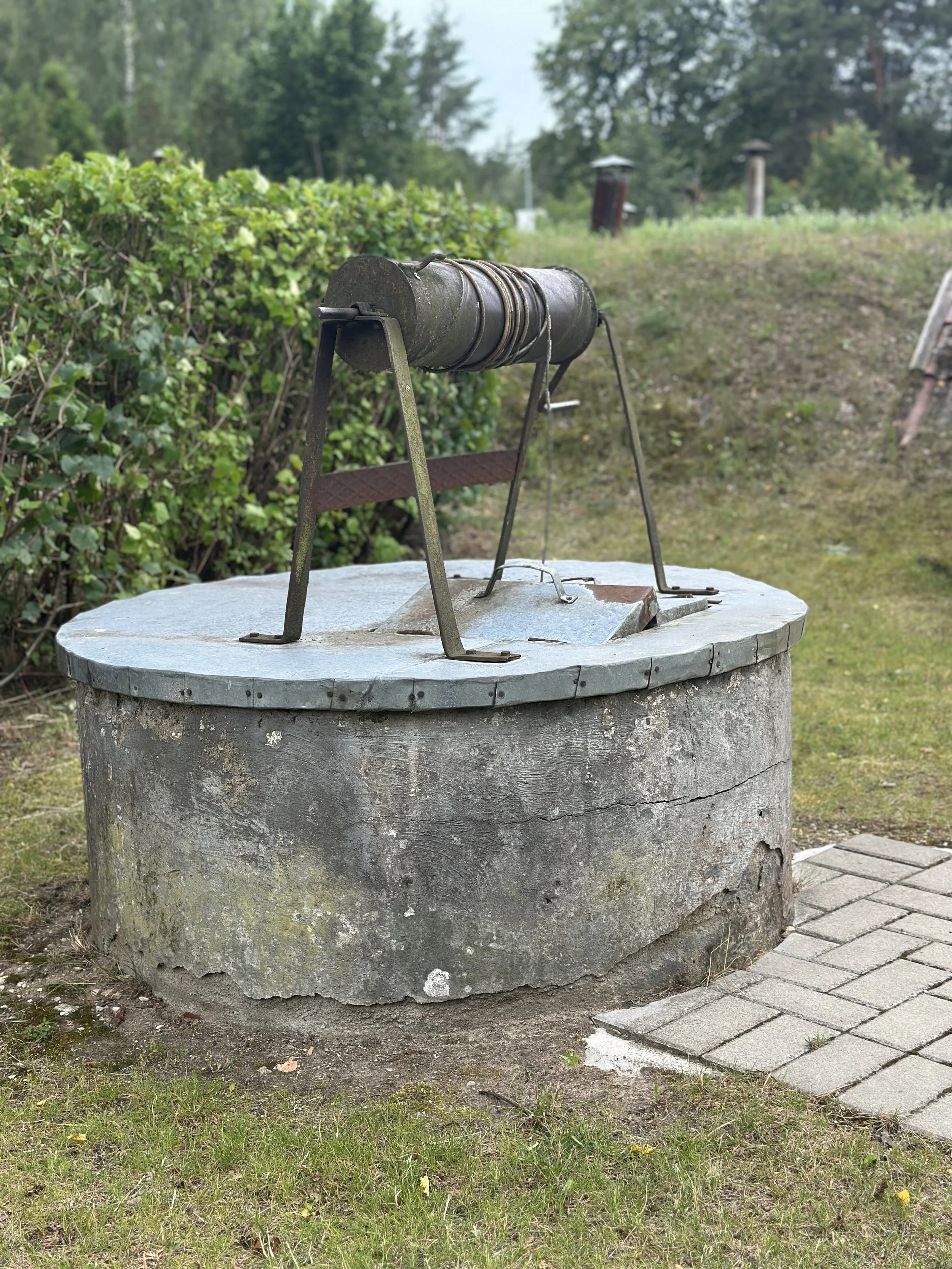
Paveiksle vaizduojamas autentiškas šulinys, esantis S. Daukanto g. 14A, Kazlų Rūdoje, kieme, kuriame gyvenu nuo 2025 m. kovo mėn. Daugiau nei aštuonis mėnesius kasdien eidavau pro jį, kol ilgainiui šis kasdienybės fragmentas tapo vienu svarbiausių projekto simbolių.
Kazlų Rūdos istorija nuo XVIII a. glaudžiai susijusi su mišku, geležies rūdos lydymu, deguto gamyba ir miškininkyste. Vietovės tapatybę formavo ne reprezentacinė architektūra ar miesto centrai, o darbas, buitis ir žmogaus santykis su aplinka. Šulinys šiame kontekste tampa ne tik vandens šaltiniu, bet ir kasdienio gyvenimo, ištvermės bei vietos atminties ženklu.
Paveiksle jis susijungia su Evangelijos pasakojimu apie moterį prie šulinio ir tampa vieta, kurioje susitinka asmeninė patirtis, vietos istorija ir dvasinės prasmės paieškos.
The well depicted in this painting is an authentic well located at 14A S. Daukanto Street, Kazlų Rūda, in the courtyard where I have lived since March 2025. For more than eight months, I passed it almost every day until this ordinary element of my surroundings gradually became one of the central symbols of the project.
Since the eighteenth century, the history of Kazlų Rūda has been closely connected to its forests, iron smelting, tar production, and forestry. Rather than being shaped by monumental architecture or urban life, the town developed through labour, everyday routines, and a close relationship with the surrounding landscape. Within this context, the well becomes more than a source of water—it stands as a symbol of daily life, endurance, and the memory of place.
In this painting, the well intersects with the biblical story of the Woman at the Well, becoming a meeting point between personal experience, local history, and the search for spiritual meaning.
NUOTRAUKOS | PHOTOS
KŪRYBINIS PROCESAS | CREATIVE PROCESS

VIDEO
GARSAS | SOUND
POEZIJA | POETRY
ŠULINYS
(Kazlų Rūda, 2025 m. lapkritis)
Daugiau nei aštuonis mėnesius
ėjau pro tą patį šulinį.
Ryte – į darbą.
Po darbo – išsekusi.
Dar užsnūdusi.
Dar nepabudusi.
Pavargusi nuo biurokratijos,
nuo svorių kilnojimo
ir nepakeliamo būties lengvumo.
Nuo tylos meilės fronte.
Nuo rutinos.
Nuo disciplinos.
Kartais – nuo savęs.
Nuo tų pačių ydų kartojimo.
Lyg nesipraususi.
Galvojau,
ar kas nors pasikeis.
O jis manęs laukė.
Apkerpėjęs.
Be priekaištų.
Kol pagaliau
prie jo sustosiu.
Senesnis už mane.
Išmintingesnis už mane.
Gilesnis už mane.
O aš vis ieškojau
dar vieno gurkšnio dopamino,
dar vieno miesto,
dar vieno bučinio.
Persikrausčiau tam,
kad išmokčiau susikaupti.
Bet radau
save.
Pavargusią.
Su brolio dovanotu puodeliu.
Su žaliu „The Sims“ deimantu,
seniai paraudusiu.
Su noru
nebepavargti gyventi.
Juokinga.
Tiek metų mokiausi
piešti kitus.
O sunkiausia pasirodė
nutapyti save.
Be vaidmens.
Be Aglaja Ray.
Tik
Eglę.
Prie šulinio.
Kartais galvoju,
kad Dievas nekalba garsiai.
Jis tiesiog
pastato šulinį
prie tavo namų
ir laukia,
kol vieną dieną
sustosi.
(Kazlų Rūda, 2025 m. lapkritis)
THE WELL
For more than eight months
I walked past the same well.
In the morning—
on my way to work.
After work—
drained.
Still half asleep.
Not yet fully awake.
Tired of bureaucracy,
of lifting weights,
and of the unbearable lightness of being.
Tired of the silence
on the love front.
Of routine.
Of discipline.
Sometimes
tired of myself.
Of repeating
the same old flaws.
As if I hadn't showered.
I kept wondering
whether anything
would ever change.
And there it was,
waiting for me.
Covered in moss.
Without reproach.
Waiting
until I finally
stopped.
Older than me.
Wiser than me.
Deeper than me.
Meanwhile,
I kept looking
for one more sip of dopamine,
one more city,
one more kiss.
I moved here
to learn
how to focus.
Instead,
I found
myself.
Exhausted.
Holding the mug
my brother gave me.
With the green Sims plumbob
that had long since
turned red.
Longing
not to grow weary
of living.
Funny.
I spent so many years
learning
how to paint others.
Only to discover
that the hardest thing
was painting myself.
Without a role.
Without Aglaja Ray.
Just
Eglė.
By the well.
Sometimes I think
God doesn't speak loudly.
He simply
places a well
beside your home
and waits
until one day
you stop.
(Kazlų Rūda, November 2025)