
BET JAU DABAR MATAU | BUT NOW I SEE
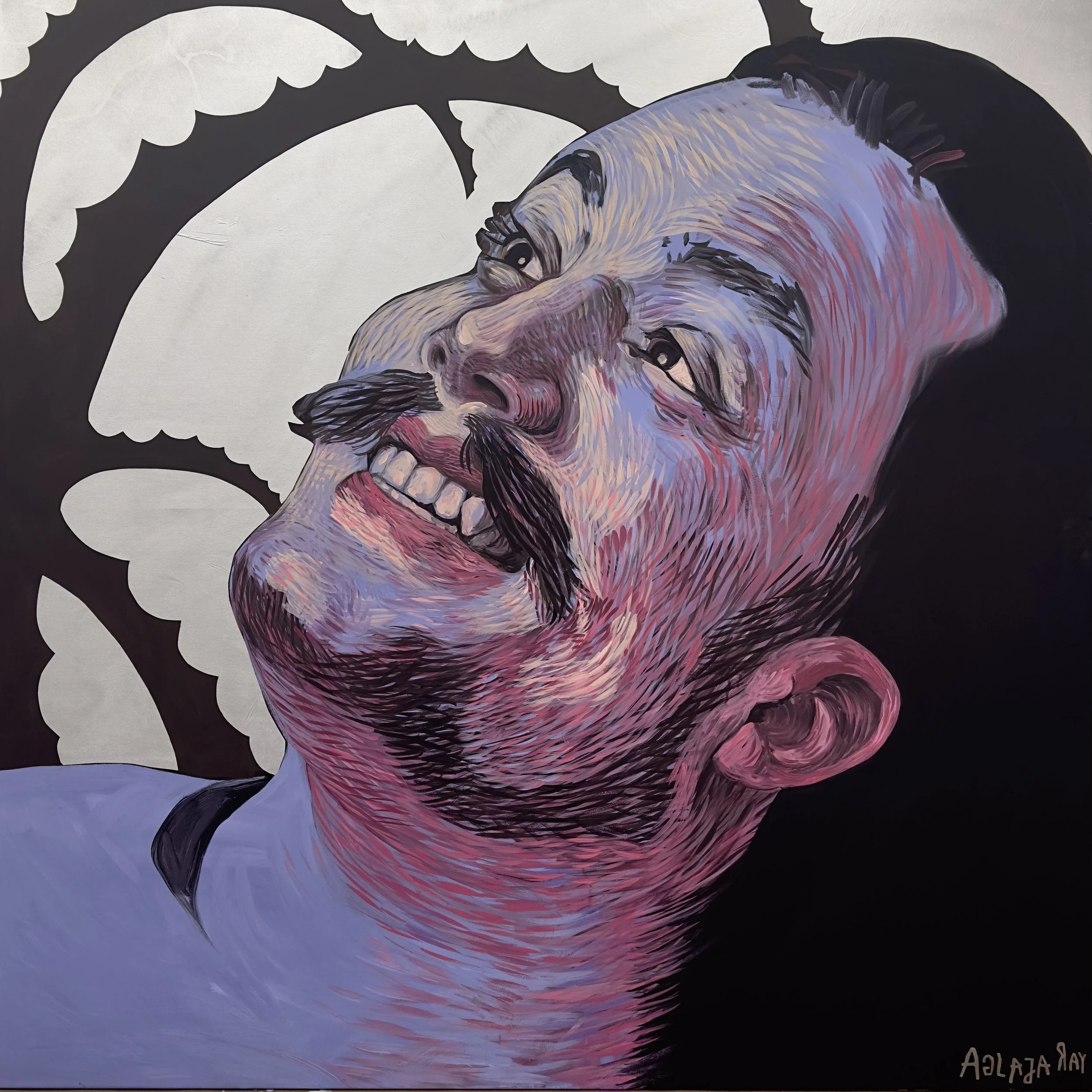
BET JAU DABAR MATAU | BUT NOW I SEE
180 × 180 cm
Acrylic on canvas
2026
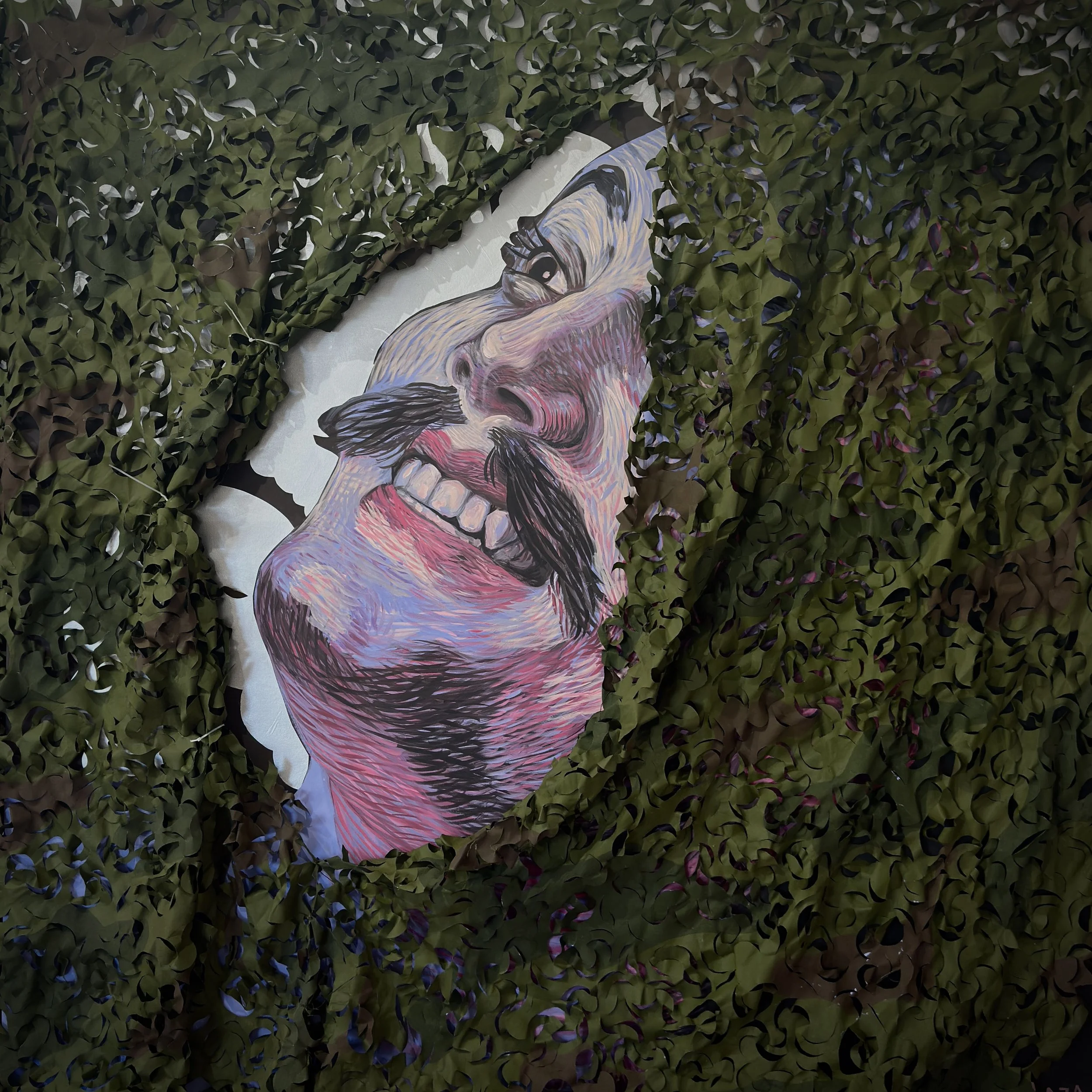
BET JAU DABAR MATAU | BUT NOW I SEE
Instaliacija su kamufliažu ( Instalattion with the camuflage)
180 × 180 cm
Acrylic on canvas
2026
KAIP GIMĖ DARBAS? HOW DID THIS WORK COME INTO BEING?
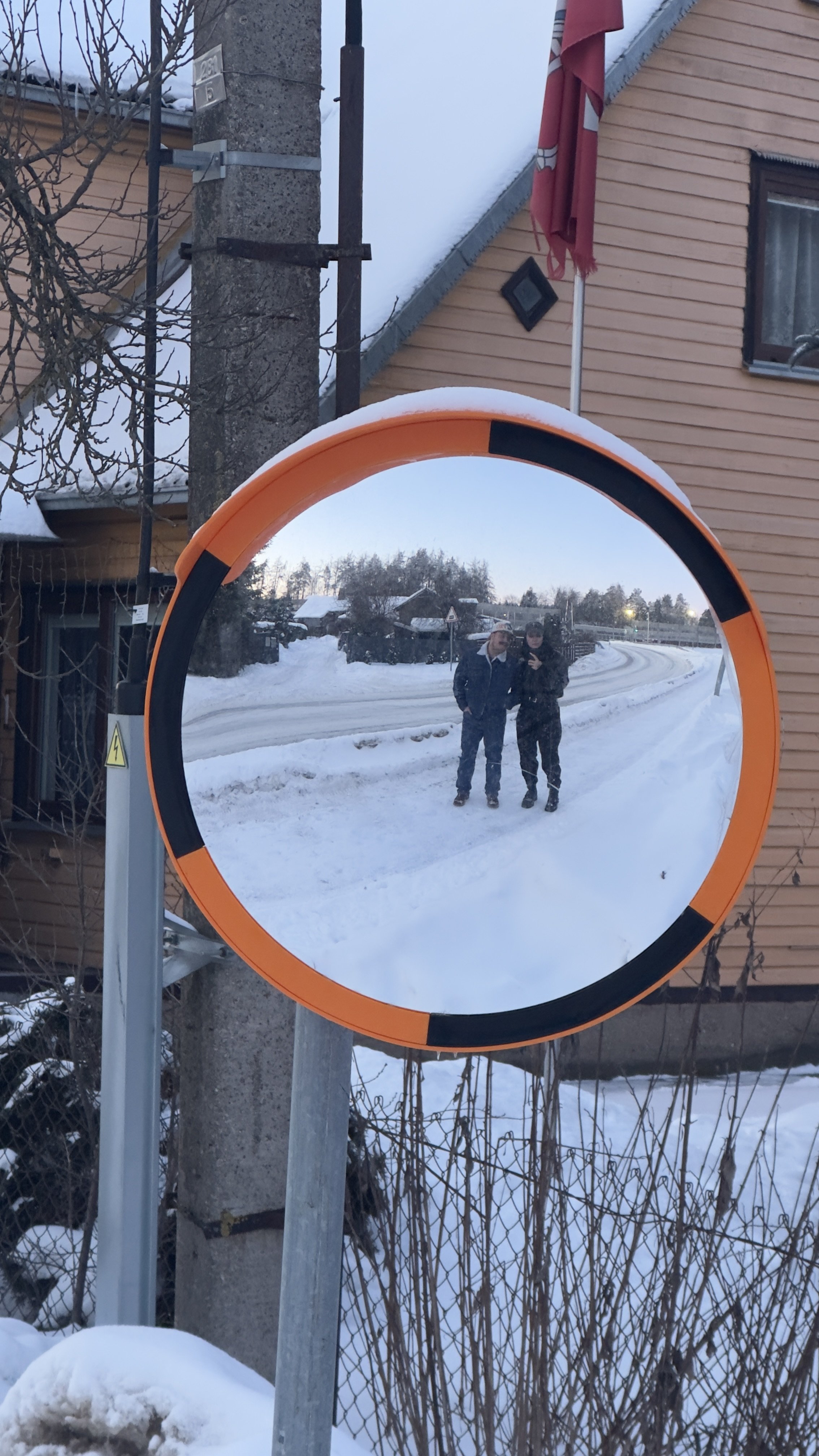
Šis kūrinys gimė tyrinėjant, kaip asmeniniai ryšiai formuojasi konkrečioje vietoje ir kaip juos veikia laikas. Prieš dešimt metų su Augustinu Gutausku trumpam susikirtome virtualioje erdvėje, tačiau tuo metu mūsų keliai nesusijungė. Po dešimties metų netikėtai susitikome man jau gyvenant Kazlų Rūdoje. Šis susitikimas tapo atspirties tašku apmąstyti, kaip laikas, aplinkybės ir vieta keičia mūsų gebėjimą iš tikrųjų pamatyti kitą žmogų. Įdomu tai, kad per tuos dešimt metų abu buvome trumpam atsidūrę Niujorke ir net bendravome, tačiau taip ir nesusitikome. Tai paskatino svarstyti, kaip didmiesčiuose, nuolatinio informacijos pertekliaus ir socialinių ryšių gausoje, tampa vis sunkiau atpažinti žmones, kurie ilgainiui gali tapti svarbūs. Kartais atrodo, tarsi žmonės vieni nuo kitų būtų paslėpti po savotišku kamufliažu – dar nepažįstami, nors jau yra vienas kito gyvenimo lauke. Gyvenimas Kazlų Rūdoje, kur mažiau triukšmo ir daugiau lėto kasdienio buvimo, paskatino mane kitaip pažvelgti į tarpusavio ryšius ir į tai, ką reiškia iš tikrųjų pamatyti kitą žmogų.
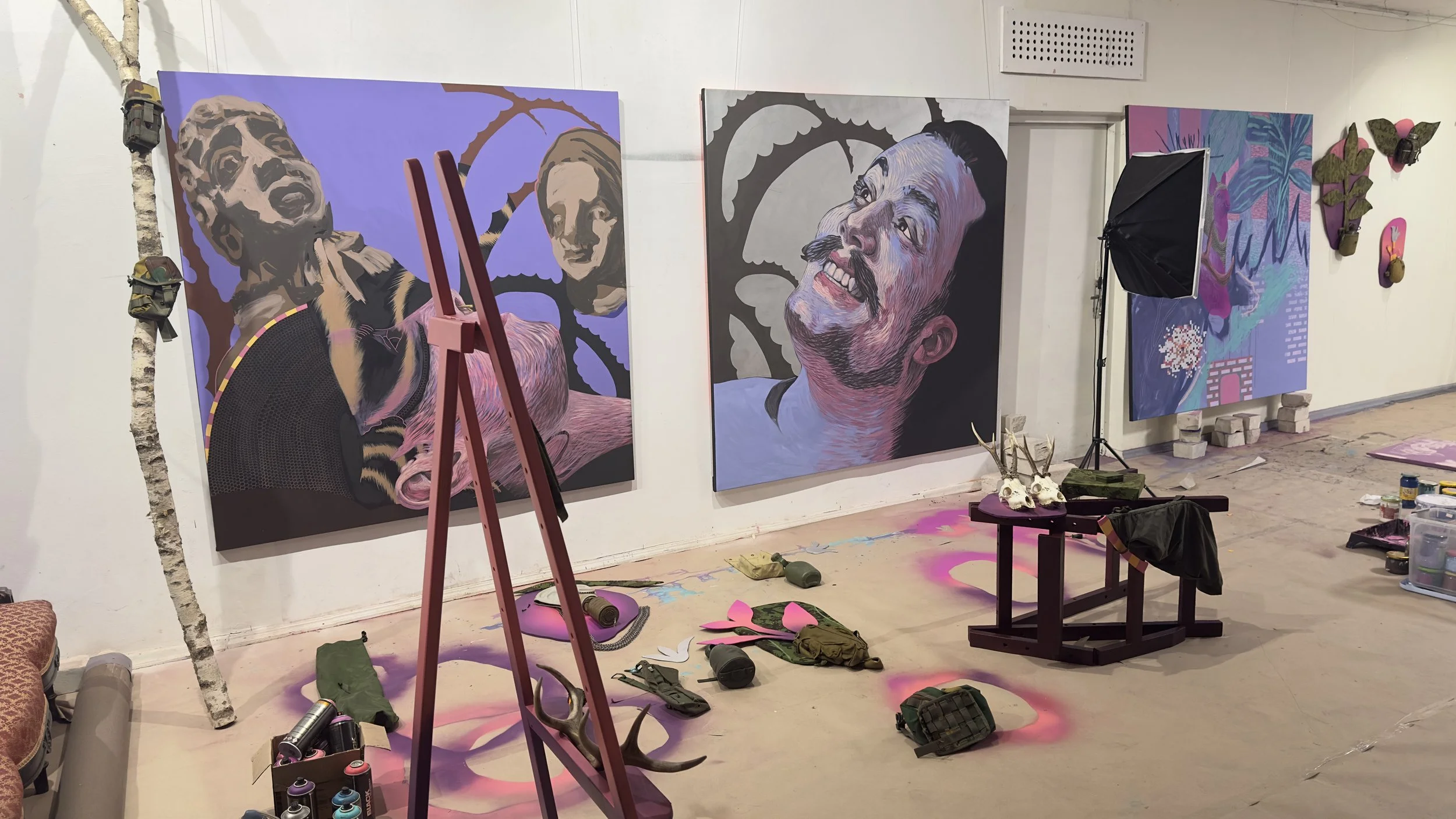
Parodos metu portretas bus iš dalies uždengtas tikru kariniu maskuojamuoju tinklu, paliekant matomą tik dalį veido. Žiūrovas kviečiamas ieškoti žmogaus žvilgsnio pro maskuotės sluoksnį, todėl pats matymo procesas tampa ne tik kūrinio tema, bet ir jo patyrimo dalimi. |
This work emerged from my research into how personal relationships are shaped by place and influenced by time. Ten years ago, Augustinas Gutauskas and I briefly crossed paths online, but our lives did not intersect beyond that. A decade later, we unexpectedly met again after I had moved to Kazlų Rūda. This encounter became a starting point for reflecting on how time, circumstance, and place transform our ability to truly see another person. Interestingly, during those ten years we both happened to spend time in New York and even exchanged messages, yet we still never met. This made me reflect on how, in large cities overwhelmed by information and an abundance of social connections, it becomes increasingly difficult to recognize the people who may one day become significant in our lives. At times, it feels as though people are hidden from one another behind a kind of camouflage—still strangers, even though they already exist within each other's orbit. Living in Kazlų Rūda, where there is less noise and more space for the slower rhythms of everyday life, encouraged me to reconsider human relationships and what it truly means to see another person.
During the exhibition, the portrait will be partially concealed behind an authentic military camouflage net, leaving only fragments of the face visible. Visitors are invited to search for the subject's gaze through the layers of camouflage, making the act of seeing not only the theme of the work, but also an essential part of experiencing it.
KOKĮ KLAUSIMĄ KELIA? WHAT QUESTION DOES IT ASK?
Kaip laikas, vieta ir mūsų dėmesys keičia gebėjimą iš tikrųjų pamatyti kitą žmogų?
How do time, place, and attention shape our ability to truly see another person?
KODĖL SVARBUS PROJEKTE? WHY IS IT IMPORTANT WITHIN THE PROJECT?
Šis kūrinys papildo projekto tyrimą, perkeldamas dėmesį nuo militarizuoto kraštovaizdžio į žmogaus santykį su kitu žmogumi. Jis siūlo pažvelgti į matymą ne kaip į momentinį veiksmą, bet kaip į procesą, kurį formuoja laikas, vieta ir dėmesys. Karinis maskuojamasis tinklas šiame darbe tampa priemone tyrinėti ribą tarp matomumo ir nematomumo, o žiūrovas įtraukiamas į patį atpažinimo procesą. | This work extends the project's investigation by shifting its focus from the militarized landscape to the relational space between people. It approaches seeing not as an instantaneous act, but as a process shaped by time, place, and attention. Here, the military camouflage net functions as a device for exploring the threshold between visibility and invisibility, inviting the viewer to participate in the act of recognition itself.
TEORINIAI ATSPIRTIES TAŠKAI THEORETICAL REFERENCES
1. Maurice Merleau-Ponty. Phenomenology of Perception (1945)
Merleau-Ponty teigė, kad matymas nėra pasyvus vaizdo registravimas – jis yra aktyvus santykis su pasauliu, kuriame dalyvauja kūnas, judėjimas ir dėmesys. Žmogų matome ne akimirksniu, bet palaipsniui, per savo patirtį ir santykį su aplinka. Šiame kūrinyje karinis maskuojamasis tinklas keičia žiūrėjimo procesą. Žiūrovas turi ieškoti portreto, judėti erdvėje ir skirti laiko tam, kad jį atpažintų. Taip matymas tampa ne tik kūrinio tema, bet ir jo patyrimo forma.
2. Martin Buber. I and Thou (1923)
Buberis išskiria du santykio būdus: „Aš–Tai“ (I–It), kai kitą suvokiame kaip objektą, ir „Aš–Tu“ (I–Thou), kai iš tiesų sutinkame kitą žmogų kaip unikalų subjektą. Toks susitikimas nėra vien fizinis – jam reikia dėmesio, atvirumo ir pasirengimo pamatyti kitą. Šis kūrinys kelia klausimą, kaip laikas, vieta ir aplinkybės keičia mūsų gebėjimą pereiti nuo paprasto žiūrėjimo prie tikro kito žmogaus atpažinimo. |
1. Maurice Merleau-Ponty. Phenomenology of Perception (1945)
Merleau-Ponty argued that seeing is not a passive act of recording visual information, but an active relationship with the world involving the body, movement, and attention. We do not perceive another person instantaneously; rather, perception unfolds gradually through experience and our engagement with the surrounding environment. In this work, the military camouflage net transforms the act of looking. The viewer must search for the portrait, move through the exhibition space, and devote time to recognizing the face. In this way, seeing becomes not only the subject of the work but also its mode of experience.
2. Martin Buber. I and Thou (1923)
In I and Thou, Martin Buber distinguishes between two modes of relating: I–It, in which another is perceived as an object, and I–Thou, in which another person is encountered as a unique subject. Such an encounter is not merely physical; it requires attention, openness, and a willingness to truly see the other. This work asks how time, place, and circumstance shape our ability to move beyond simply looking at another person toward genuinely recognizing them.
VIETOS ISTORIJA LOCAL HISTORY
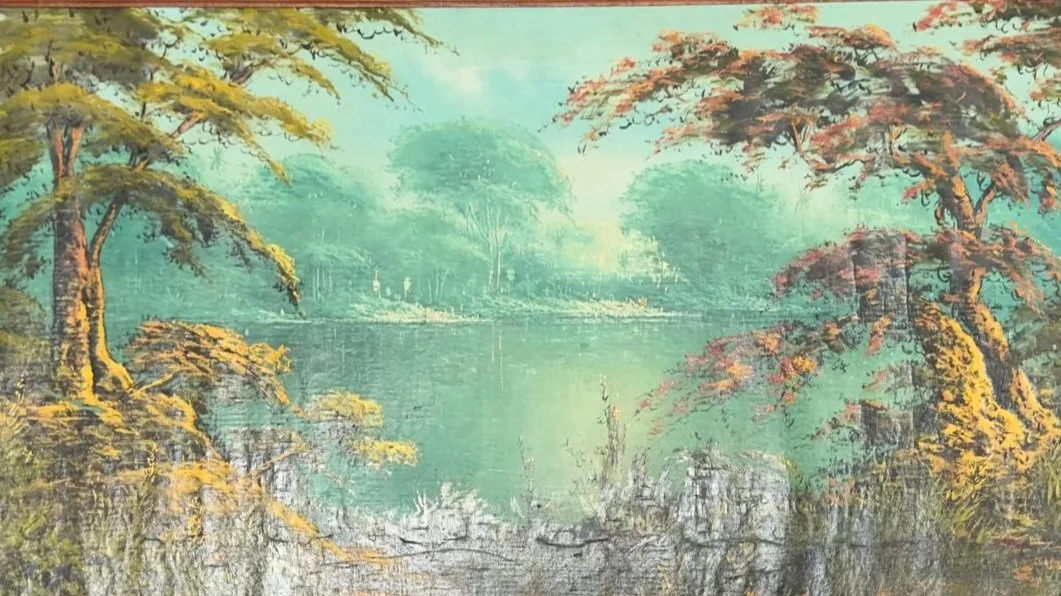
Kazlų Rūda yra viena iš Lietuvos savivaldybių, kurioje karinis buvimas yra kasdienės aplinkos dalis. Ruošdamasi parodai vietinėje „Facebook“ Kazlų Rūdos bendruomenės grupėje pakviečiau gyventojus padovanoti daiktų, susijusių su Kazlų Rūda, mišku ar kariuomene, kurie galėtų tapti meninio tyrimo dalimi. Į kvietimą atsiliepė kariniame poligone dirbantis vietos gyventojas. Jis padovanojo autentišką karinį maskuojamąjį tinklą, taip pat kariuomenėje naudotas gertuves ir aprangos elementus. Šiame kūrinyje maskuojamasis tinklas tampa ne tik karinės aplinkos ženklu, bet ir bendruomenės įsitraukimo į meninio tyrimo procesą liudijimu. Objektas, kasdien naudojamas maskuoti, parodoje įgyja kitą funkciją – jis kviečia ne paslėpti, o įsižiūrėti.
Kazlų Rūda is one of Lithuania's municipalities where the military is an integral part of everyday life. While preparing this exhibition, I invited members of a local Kazlų Rūda Facebook community group to donate objects related to the town, the surrounding forests, or the military that could become part of my artistic research. One of the respondents was a local resident working at the nearby military training area. He donated an authentic military camouflage net, along with military canteens and pieces of military clothing. In this work, the camouflage net functions not only as a signifier of the militarized environment but also as evidence of the local community's participation in the artistic research process. An object ordinarily used for concealment acquires a different role within the exhibition: rather than hiding, it invites closer attention.
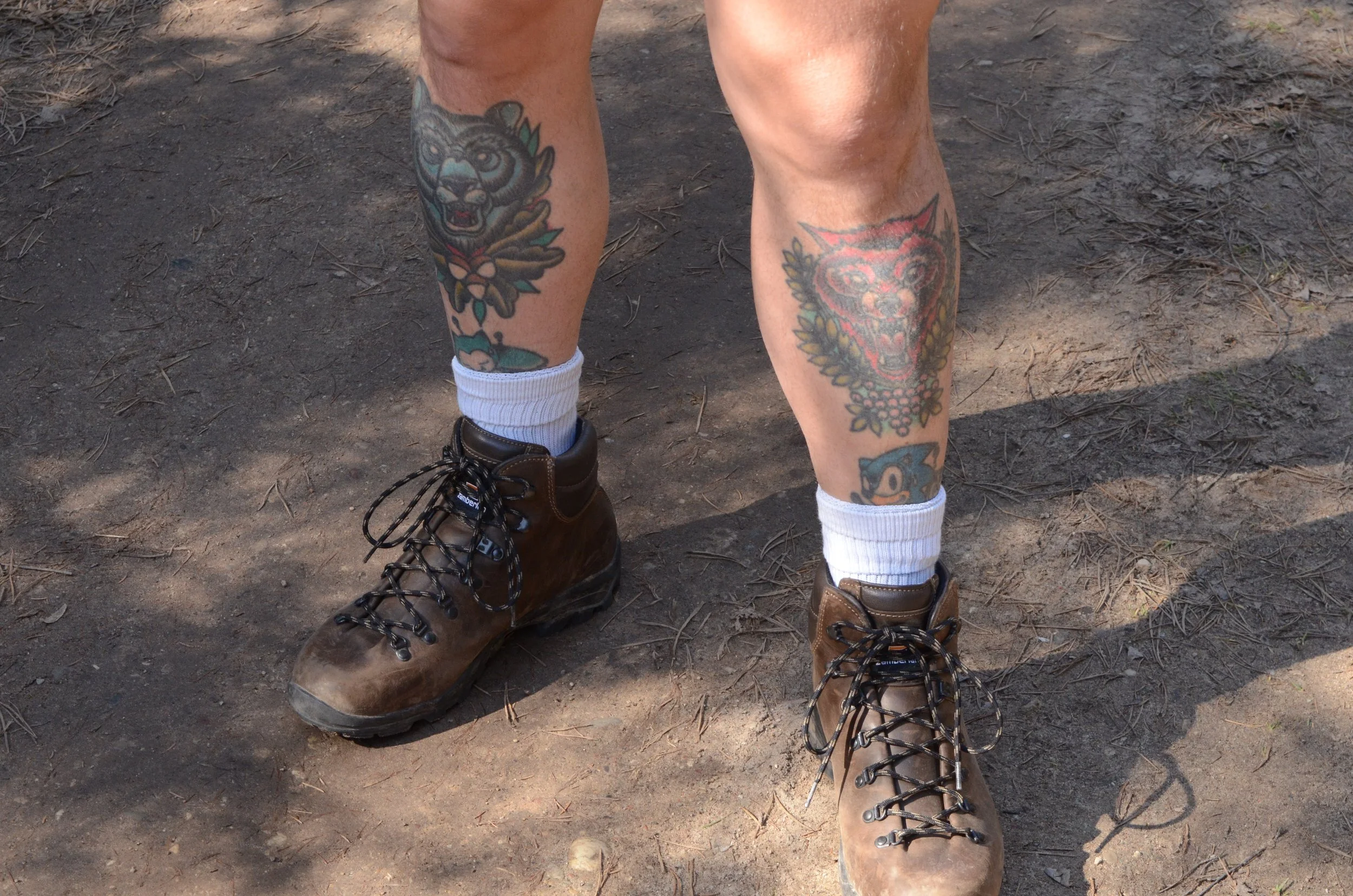
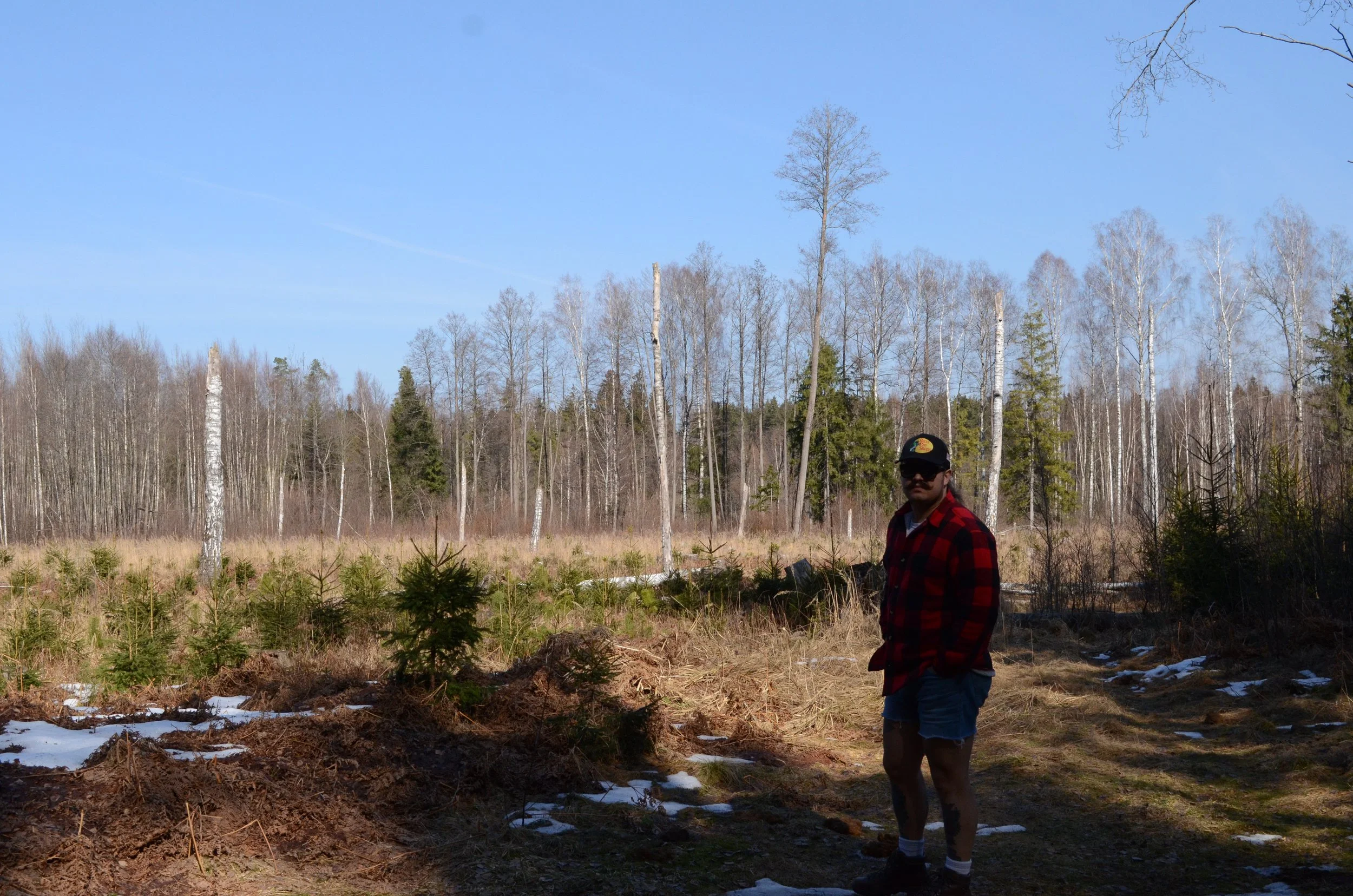
NUOTRAUKOS | PHOTOS


KŪRYBINIS PROCESAS | CREATIVE PROCESS
TYRIMO ĮRAŠAS 04 – SUSITIKIMAI
RESEARCH ENTRY 06 - ENCOUNTERS
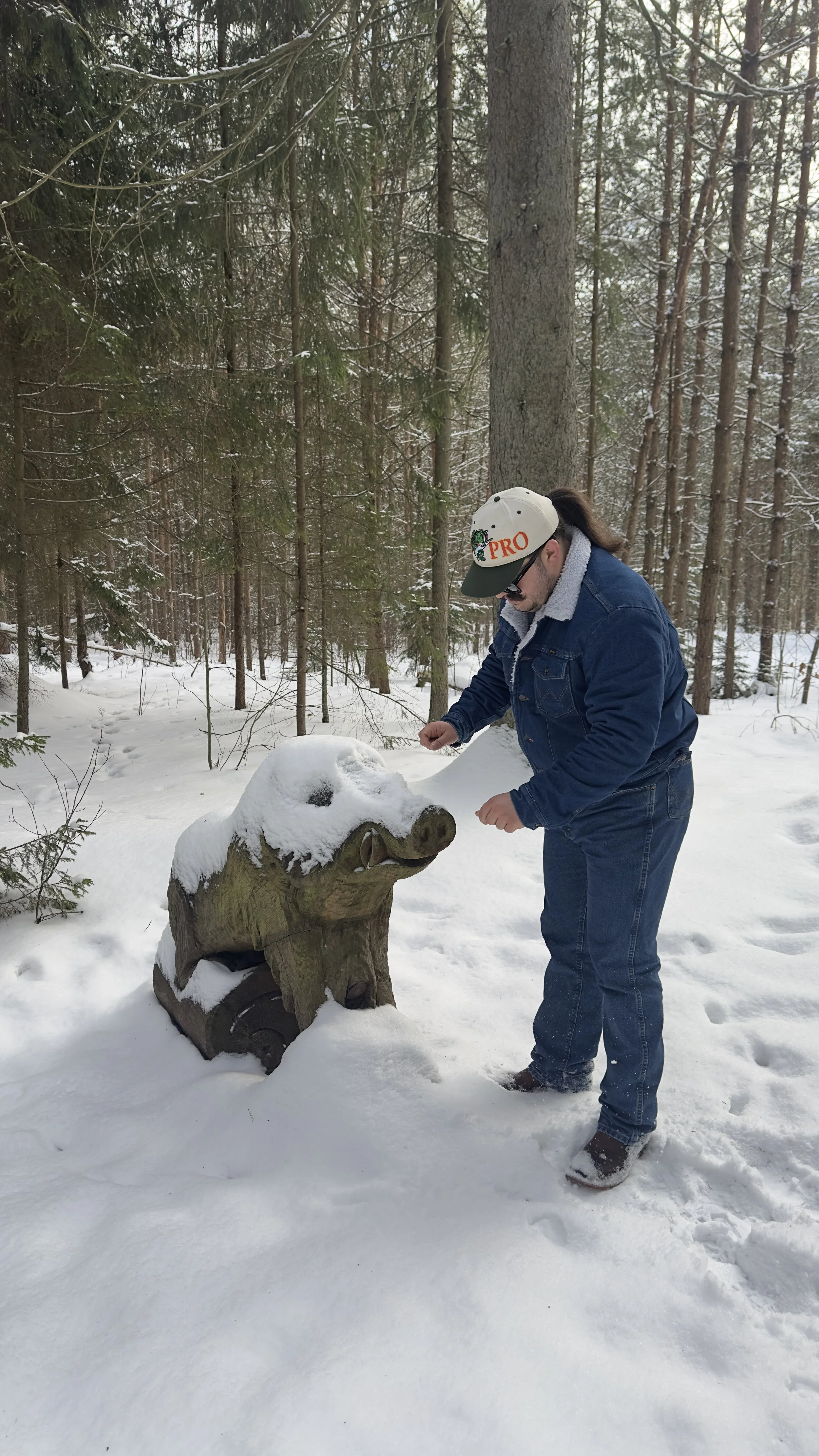
Tyrimo įrašas 04 – Susitikimai. Šiame vaizdo įraše fiksuojami iš pirmo žvilgsnio paprasti kasdienybės fragmentai, kurie pamažu ima keisti asmeninę patirtį. Gatvėje rastas delfino žaisliukas, valandos tapant namuose ir lėti pasivaikščiojimai po pavasarėjantį mišką tampa besiformuojančio gyvenimo etapo ženklais. Pavasariui įsibėgėjant kadruose pamažu atsiranda ir kitas žmogus. Tai nėra pasakojimas apie santykius – veikiau stebėjimas, kaip artumas keičia santykį su vieta. Tas pats miškas, tie patys takai ir tas pats kraštovaizdis įgyja naują prasmę, kai patiriami nebe vienumoje. Šie stebėjimai tampa ilgalaikio meninio tyrimo dalimi, kuriame tyrinėju kraštovaizdžio, bendruomenės ir asmeninės patirties santykį Kazlų Rūdoje. | Research Entry 04 – Encounters This field recording follows a series of seemingly ordinary moments that gradually begin to transform everyday life. A small dolphin toy found on the street, hours spent painting at home, and quiet walks through the forest become fragments of a changing personal landscape. As spring unfolds, another presence slowly enters the frame. Rather than documenting a relationship, the video reflects on how human connection subtly alters one's perception of place. The forest remains the same, yet it is experienced differently when shared with another person. These observations form part of my long-term artistic research exploring landscape, memory, community and lived experience in Kazlų Rūda.
GARSAS | SOUND
POEZIJA | POETRY
BET JAU DABAR MATAU
Kaip raktai, kurių nerandi,
kai jau žengi pro duris.
O buvo ant nosies,
kažkur po ranka.
Nematyt.
Taip žmonės
viens kito neranda,
nors reikia artumo.
Kažką atrakinti viduj,
kad pabustų.
Pajustų.
Patirtų.
Išnirtų tikrieji veidai.
Vaikai.
Nebijotų išlįst
iš vaikystės slėptuvių.
Nebijotų lėktuvų garsų.
Gal jie
popieriniai?
Su metais
kamufliažas tankėja.
Sunkėja.
O norisi
jį nusimesti.
Dulkėtą.
Palikti palėpėj.
(Kazlų Rūda, 2026)
BUT NOW I SEE
Like the keys you can't find
when you're already walking out the door.
They were right there,
within reach.
Unseen.
That's how people
miss each other sometimes,
even when they're longing
for closeness.
To unlock something inside,
so it could wake.
Feel.
Experience.
The true faces
could surface.
Children.
Unafraid to crawl out
of their childhood hiding places.
Unafraid of the sound of airplanes.
Maybe they're
made of paper.
As the years go by,
the camouflage grows thicker.
Heavier.
And all I want
is to take it off.
Dust-covered.
Leave it
in the attic.
(Kazlų Rūda, 2026)